I’ve been riding along dusty trails and sleeping under the stars with Rockstar’s western epic for over a decade now, and let me tell you — my heart just can’t take another tragic goodbye. The Red Dead franchise has built its reputation on breathtaking landscapes, meticulous historical detail, and characters so real you feel the weight of every choice they make. But after two mainline games that ended with their lead protagonists meeting brutal, gut-wrenching demises, I’m ready to draw a line in the sand. If Red Dead Redemption 3 is truly on the horizon, it’s time to break tradition and let one of these outlaws ride off into a sunset that doesn’t leave me staring at the credits through tear-soaked eyes.
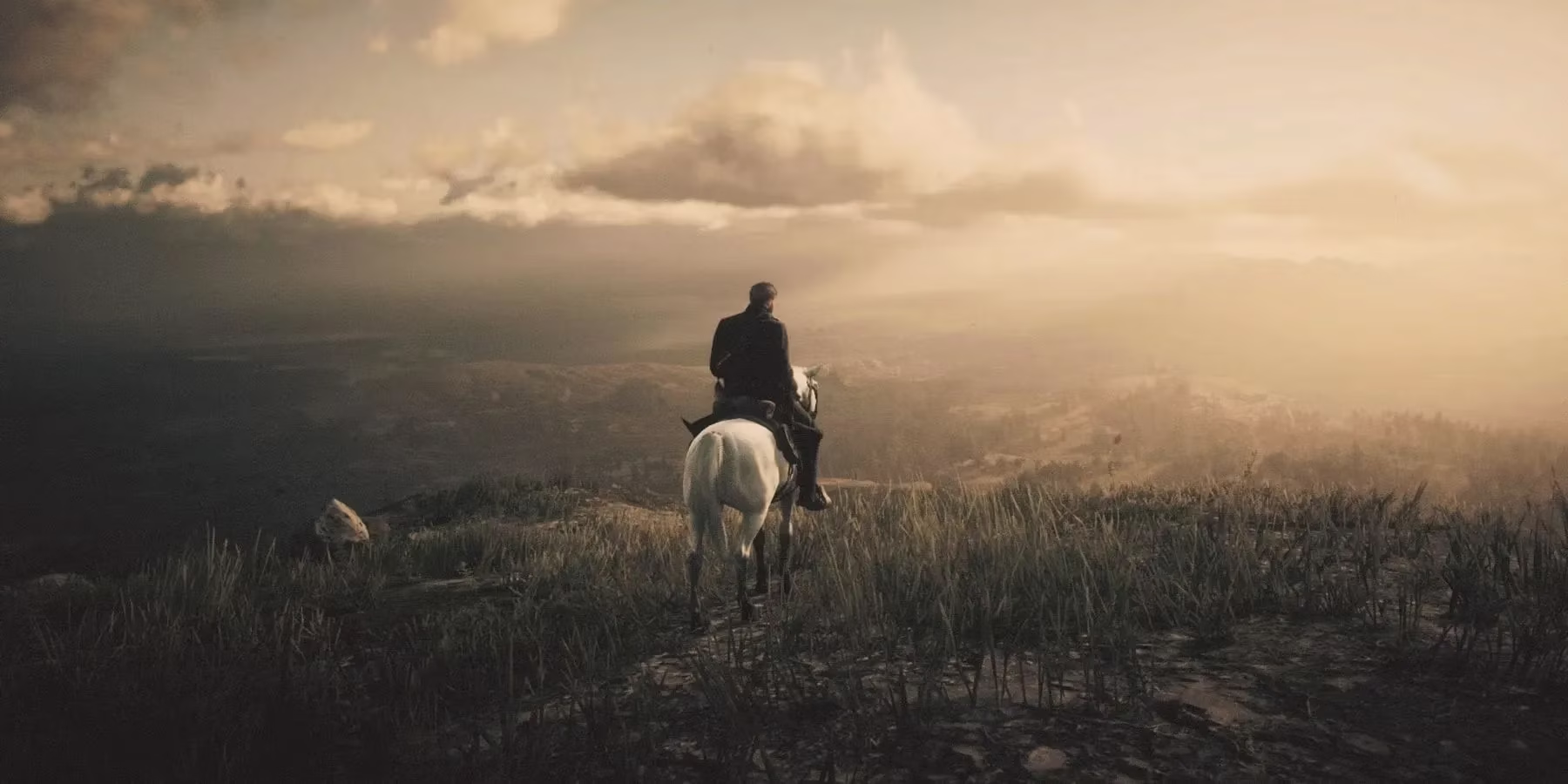
Even the horses in this series don’t get peaceful ends — a moment that hits players in the gut when they least expect it. That kind of quiet brutality is woven into every corner of the Red Dead world. The Old West is dying, after all, and it takes no prisoners. You can see it in the way John Marston was gunned down on his own ranch by a faceless platoon of soldiers, a hero betrayed by the very government that promised him a second chance. And you can feel it in Arthur Morgan’s labored breathing as tuberculosis slowly claims the toughest man in the Van der Linde gang, his last hours spent doing what he could to secure a future for the ones he loved. Those endings are masterpieces of storytelling — I won’t deny that. But after two heartbreaks, the pattern is starting to feel less like a poignant reflection on the era and more like a narrative crutch.
Sure, the deaths of John and Arthur served a purpose. They hammered home the theme that the ways of the gunslinger have no place in a world moving toward telephones, automobiles, and federal agencies. Red Dead Redemption hammered that nail hard, and Red Dead Redemption 2 drove it deeper. Do we really need a third protagonist to cough out his last breath or fall in a hail of bullets just to make the same point? I’m not so sure. The franchise risks becoming painfully predictable, and that predictability could sap the emotional impact the developers work so hard to create. A happy — or at least bittersweet — ending wouldn’t cheapen the narrative; it might actually be the boldest move Rockstar could make.
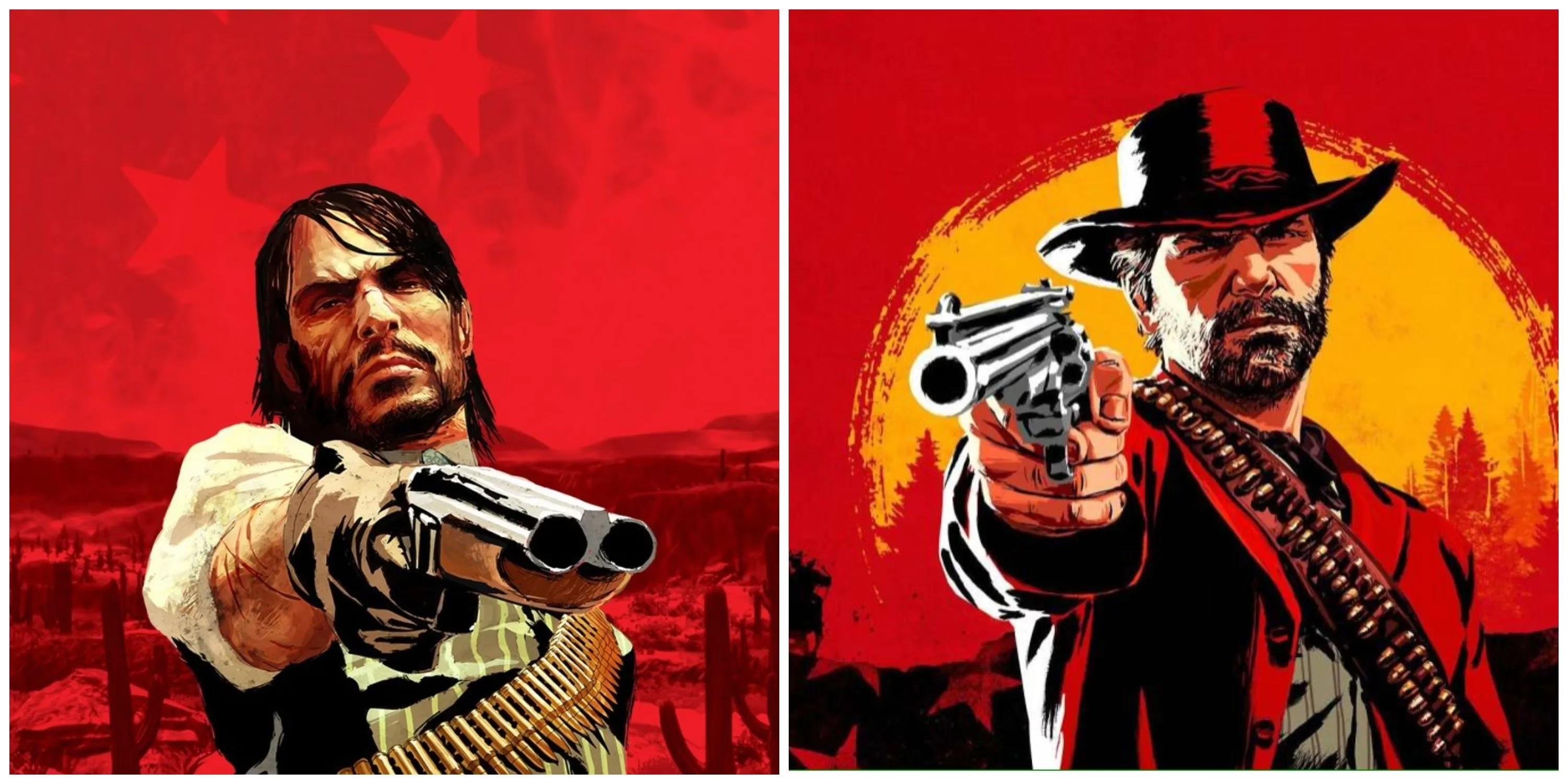
John and Arthur. Two men who gave everything so that someone else could have the life they couldn’t. The most natural candidate for a new story is Jack Marston, the boy caught in the crossfire of both games’ tragedies. By 1914, Jack has already avenged his father. He’s a young man carrying the trauma of his childhood, the weight of the Marston name, and a world that’s speeding into modernity. A Red Dead Redemption 3 centered on Jack wouldn’t be another cowboy fantasy — it would be a tale of a former outlaw’s son navigating the 1920s, perhaps dealing with the fallout of the First World War, Prohibition-era gangsters, and the last gasps of frontier justice. That shift in tone could breathe fresh life into the series, and it would finally put the focus on survival rather than sacrifice.
And here’s where I get really passionate. If Rockstar kills off Jack too, what was the point of it all? John gave up his life so Jack could be free. Arthur spent his final days ensuring John, Abigail, and Jack could escape the cycle of violence. To have Jack meet the same grim fate would make those sacrifices feel like cruel cosmic jokes. Jack’s survival wouldn’t be a happily-ever-after fairy tale — it would be living proof that redemption, however messy and painful, can actually stick. He could walk away from the outlaw life, build something new, and prove that the Marston legacy isn’t just a trail of graves. Maybe he ends up writing the books he talked about as a kid, finding peace in words instead of gunfire. I don’t need a perfect ending. Just one where the screen fades to black and I can exhale, knowing the character I’ve grown to love is still breathing.
There’s a deeper layer here too. Red Dead Redemption 3, whenever it arrives (and Rockstar is being very quiet about it in 2026), has the chance to redefine what a western video game can be. If it clings too tightly to the formula of dead protagonists and melancholy conclusions, it might miss the opportunity to explore hope, legacy, and what it means to genuinely escape a brutal past. The gaming community is hungry for a narrative that respects the intelligence of its audience — and let’s be honest, we’re a little tired of being emotionally eviscerated. The series can still deliver the hard truths of a changing America without sending its main character to an early grave. I’m ready for a story where the redemption feels earned and the ending feels like a reward, not a punishment.
Maybe I’m asking too much. Maybe the trademark of Red Dead is that the hero never gets to enjoy the peace he fights for. But traditions are meant to be challenged, and after two of the most memorable video game endings ever crafted, I’d like to see the writers try something different. Let Jack Marston, or whoever the next protagonist may be, learn from the past without being destroyed by it. Give us a ray of light in that vast, beautiful, merciless wilderness. After all, if the franchise can make me cry twice, it can surely make me smile once.
More than anything, I want to remember the next Red Dead for how it lifted me up, not how it tore me apart. The stage is set, the world is waiting, and I’ve got my horse saddled. Just this once, let’s ride toward a future where the gunslinger lives.