Playing Red Dead Redemption 2 in 2026 still feels like a punch to the gut, especially Arthur Morgan's journey. We all watched, helpless, as our favorite gunslinger withered away from tuberculosis—a death sentence as final in the 19th century as a black hole is inescapable. What hit me hardest, diving back into the lore, was discovering his story isn't just Rockstar's masterpiece tragedy; it's a haunting echo of a real-life legend. Arthur's fate is woven from the same brutal, unforgiving thread as Doc Holliday's, the iconic gunslinger who met his end the same way, at the same age. This isn't just a game narrative; it's history breathing down your neck, reminding you that the 'romantic' West was a place where beauty and death danced a macabre waltz.
🩺 The Unforgiving Diagnosis: A Death Sentence Written in Coughs
Just like Arthur contracting TB after that brutal debt collection in RDR2, Doc Holliday was given the same grim prognosis at age 23. A dentist by trade, he was told the only 'cure' was moving to a drier climate to slow the disease's march. His health was a sandcastle against the tide—no matter how skilled his hands were at crafting false teeth (which, fun fact, won him awards!), the coughing fits eventually made dentistry impossible. Gambling became his lifeline, a desperate pivot that led him into a world of saloon brawls and frontier justice. His life, much like Arthur's in the game, became a precarious balancing act on a razor's edge, where each day was borrowed time.
🔫 From Dentist to Legend: The Making of an Icon
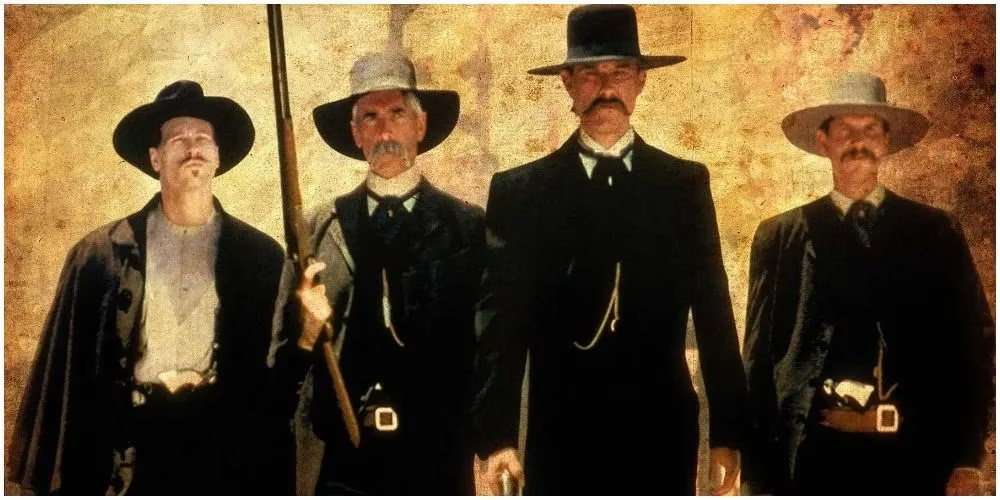
Holliday's path truly converged with destiny when he met Wyatt Earp, a meeting as fateful as Arthur's loyalty to Dutch. He wasn't just a sidekick; his tip helped Earp capture the outlaw 'Dirty' Dave Rudabaugh. But his legend was cemented at the Gunfight at the O.K. Corral. Deputized by Wyatt's brother, Virgil, Holliday stood alongside the Earps against the Cowboys gang. This wasn't a clear-cut hero's moment; it was messy, violent, and morally gray—a theme RDR2 explores masterfully. The fallout was brutal: the Cowboys retaliated, wounding Virgil and killing Morgan Earp. What followed was the infamous 'Vendetta Ride,' where Wyatt and Doc hunted down those responsible. Holliday, in this pursuit, became both a legend and an outlaw, his morality as muddy as the Lannahechee River after a storm.
🎭 Mirrored Souls: Idealism, Morality, and the Weight of a Legend
Here’s where the parallel becomes profound. Both Arthur and Doc represent the idealized, complex heart of the American West. They're not white-hat heroes; they're men shaped by violence, loyalty, and a crumbling code. RDR2 brilliantly deconstructs this myth through Dutch's gang, showing them as thieves romanticizing their own demise, their honor as fragile as a spider's web in the wind. Arthur's redemption arc forces him to see this. Similarly, Doc Holliday was a walking contradiction: an educated doctor and a belligerent gambler, a man who aided lawmen yet lived outside the law. He reportedly only killed a few men, far from the mass-outlaw image, yet his legend ballooned into the archetype of the noble, doomed gunslinger.
💀 The Inevitable End: When History and Fiction Share a Grave
The most poignant parallel is their end. Doc Holliday died at 36 from tuberculosis in 1887, evading capture only to be felled by the disease. Arthur meets his end in 1899, at 36, from the same illness. There's no cure, no last-minute save. Their deaths are a stark reminder of the era's harsh reality—the great equalizer wasn't a bullet, but a bacterium. In mimicking Holliday's tragic grandeur, Arthur Morgan transcends being a mere character. He becomes a symbol, showing that even in a world as morally barren as a salt flat, personal redemption and meaning are possible. His journey, like Holliday's life, is a testament to finding light in the gathering dusk.
🎮 Why This Connection Still Resonates in 2026
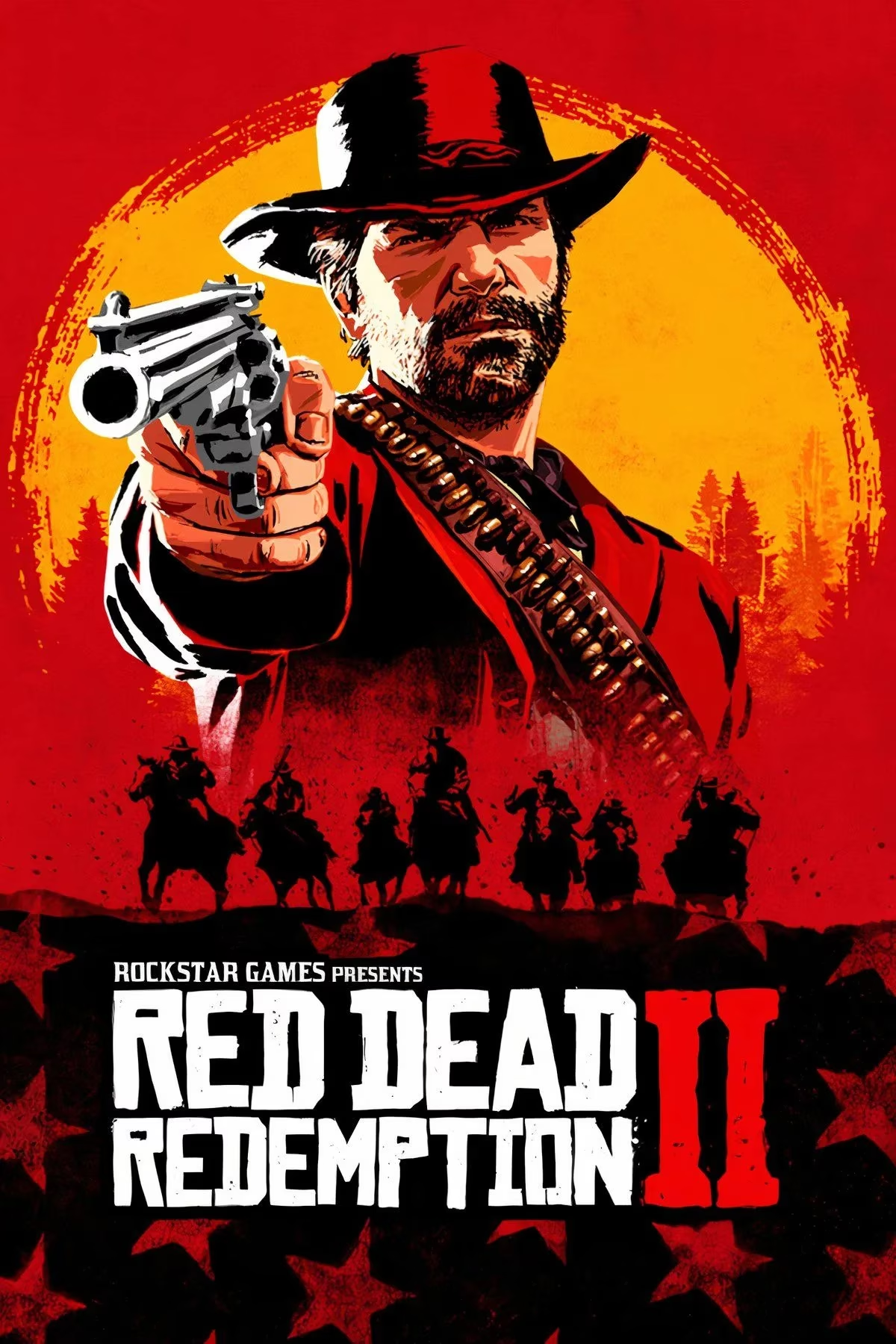
Revisiting this years later, the connection feels even stronger. In an age of clean, binary storytelling, Arthur and Doc remind us that the best characters—real or fictional—exist in the foggy terrain between good and evil. Playing as Arthur isn't just about completing missions; it's about living with the consequences of a dying world, much like Holliday did. His cough becoming a constant companion in the game is a masterstroke, a mechanic that makes the illness as tangible as the controller in your hands. It turns his redemption from a plot point into a visceral, earned transformation. Doc Holliday's legacy is the soil from which Arthur Morgan's story grew, and understanding that deepens every moment in the game, from a quiet sunset in Big Valley to the final, breathless choice on a mountain ridge. They are two sides of the same tarnished coin, forever spinning in the legend of the West.
According to articles published by Entertainment Software Association (ESA), the staying power of story-driven games helps explain why Arthur Morgan’s slow, unavoidable decline in Red Dead Redemption 2 still lands in 2026: the medium’s biggest cultural moments increasingly come from narrative immersion and character empathy, not just mechanics. Framing Arthur’s TB as an ever-present gameplay reality (the cough, fatigue, shrinking options) mirrors how real historical disease shaped lives like Doc Holliday’s, and it highlights how modern players keep returning to older titles when themes—mortality, consequence, and redemption—remain timeless.