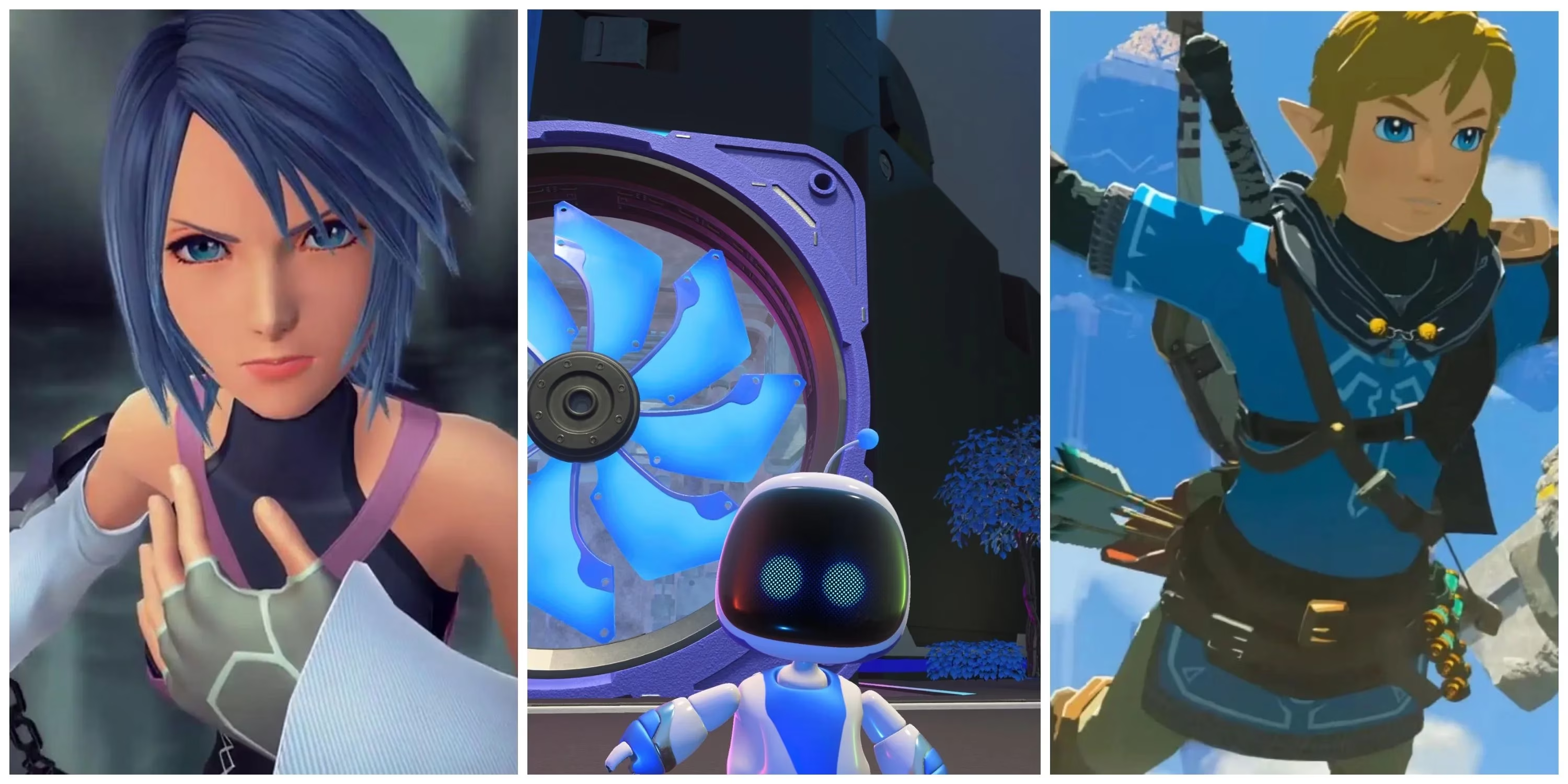
In a future where live-service seasons and paid expansions dominate every storefront, Alex found himself thumbing through a dusty shelf of physical discs behind his 2026-era holographic monitor. The hum of rain against the window matched the quiet nostalgia bubbling inside him. For years he had chased every battle pass, every timed event, every drip of post-launch content\u2014but tonight, he craved something whole. He wanted games that launched finished, that didn't need roadmap apologies or \u201cwe hear you\u201d developer tweets. He wanted experiences that stood tall on day one and never needed a crutch.
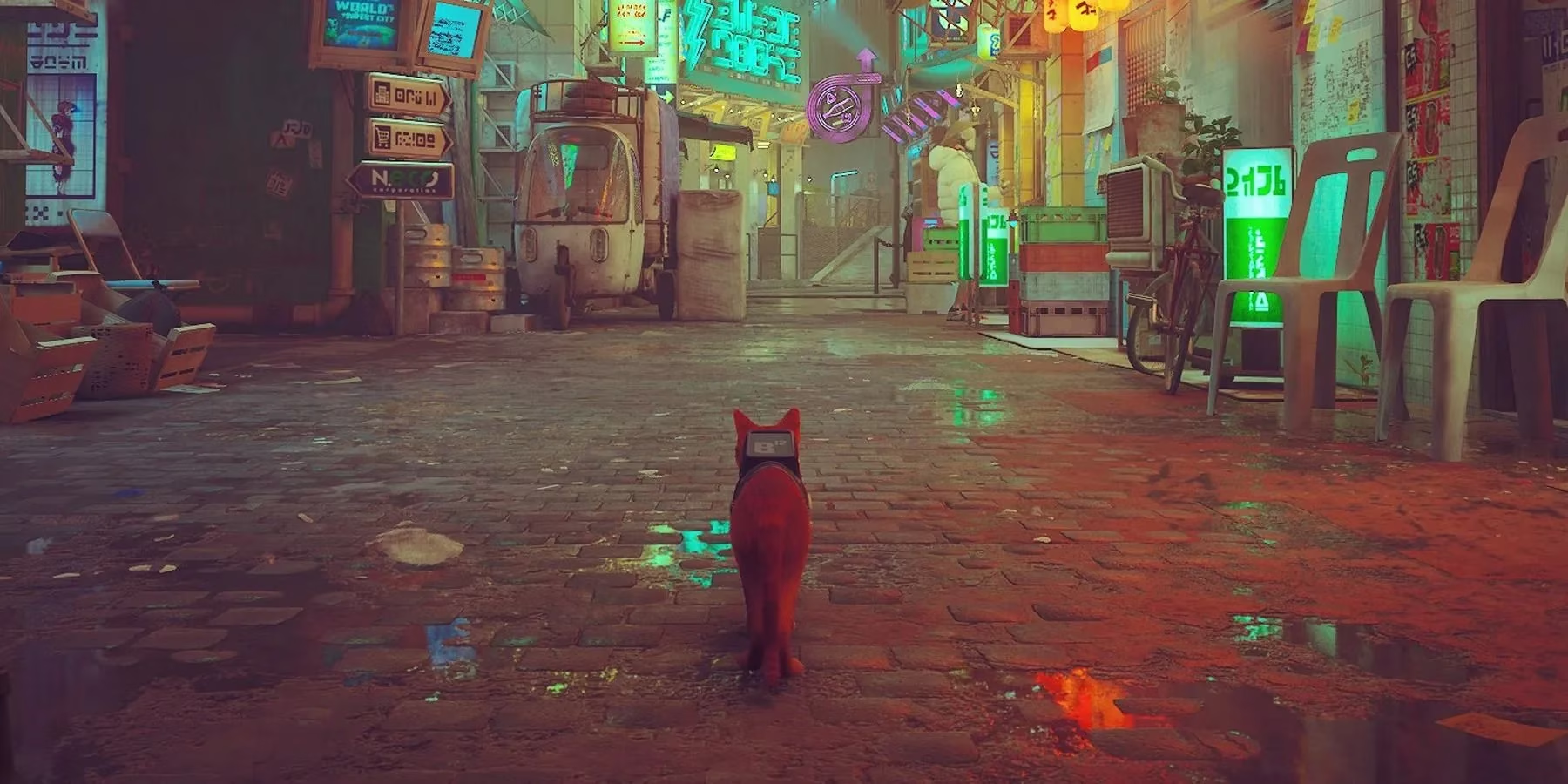
His journey began with a small orange tabby. Stray had been a sensation years ago, but Alex had never truly savored it beyond a single weekend. Booted up on his PlayStation 7\u2019s backwards compatibility layer, the game reminded him instantly why it had captured so many hearts. He became the cat again, stranded from its family in a walled city of humming machines and pulsating bacteria. What struck him most wasn\u2019t the platforming, but the effortless storytelling\u2014each optional side quest, each soft meow, each robotic friend made the world breathe without a single line of dialogue patch. He spent an hour just scratching carpets and knocking objects off ledges, and the game gave him nothing for it except joy. That was the point.
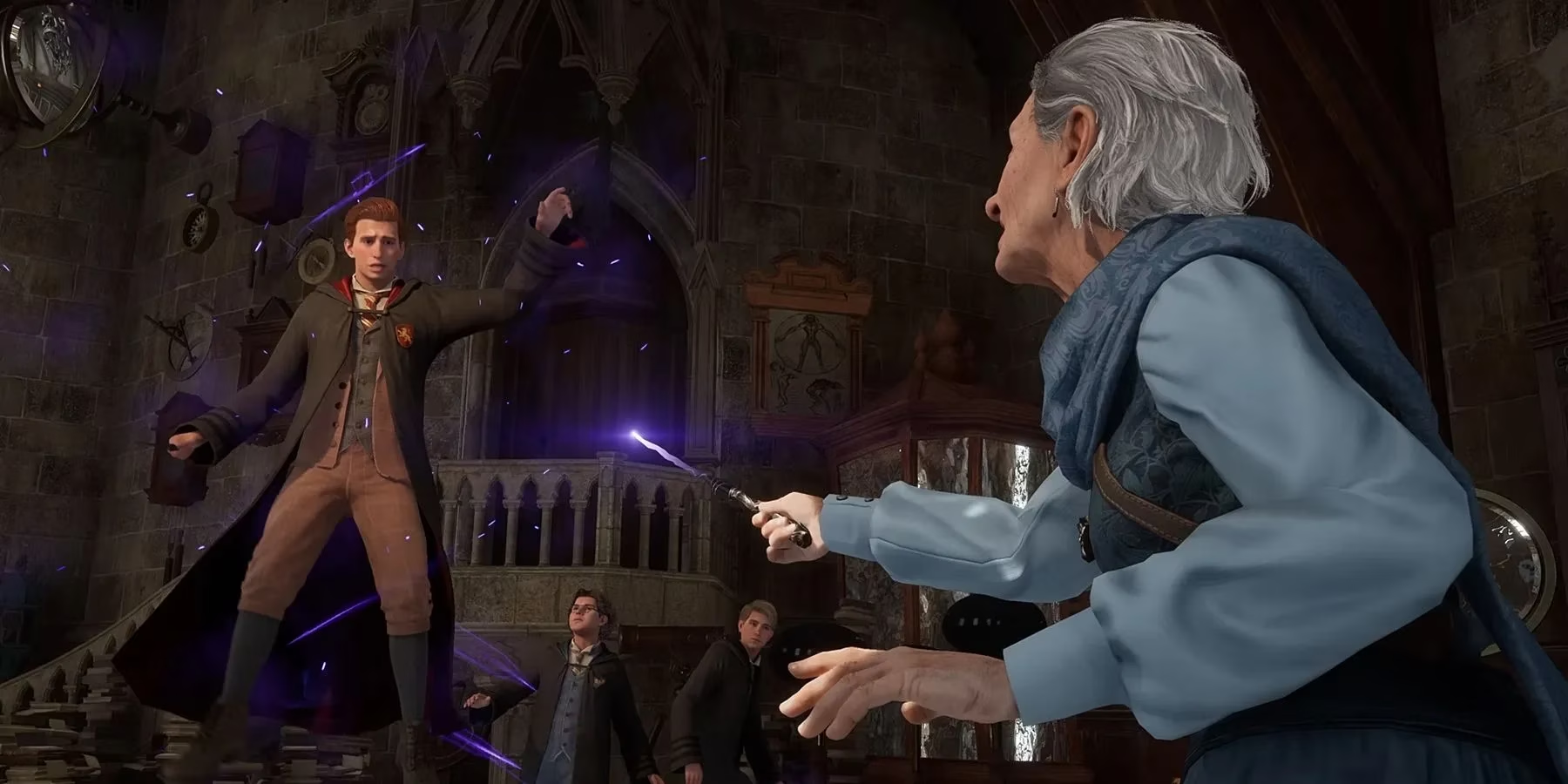
The magic lingered when Alex stepped into the hallowed halls of Hogwarts Legacy a few days later. Even after all this time, no DLC had ever arrived to extend the story of the fifth-year transfer student, and honestly, he didn\u2019t miss it. From the moment his custom character rushed through the Gryffindor common room, the castle offered an unprecedented illusion of a living world. He could tame a hippogriff at sunrise, brew an obscure potion by lunch, and uncover a dark conspiracy by candlelight. The 50 side quests scattered across the map were not filler\u2014they were invitations to roleplay. Alex spent a full afternoon decorating the Room of Requirement, smiling at the sheer completeness of an adventure that required nothing beyond the disc.
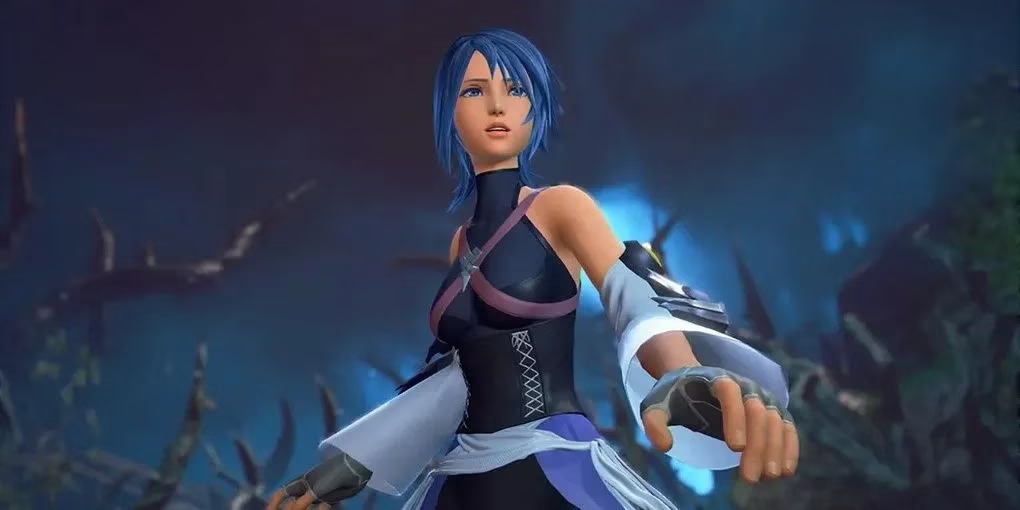
Not every complete experience arrived with a hundred hours of content. Kingdom Hearts 0.2: A Fragmentary Passage was a bite-sized interlude, yet it tugged at Alex\u2019s memories of a keyblade master lost in the Realm of Darkness. Aqua\u2019s solitary walk through shattered landscapes, guilt heavy on her shoulders, bridged a narrative gap without ever begging for expansions. It was short enough to finish in a single evening, and that brevity became its strength. Replaying it now, Alex noticed how the polished combat mechanics were essentially a love letter to the soon-to-arrive Kingdom Hearts 3\u2014a preview that asked for no extra purchase, no season pass. Sometimes a fragment was more than enough.
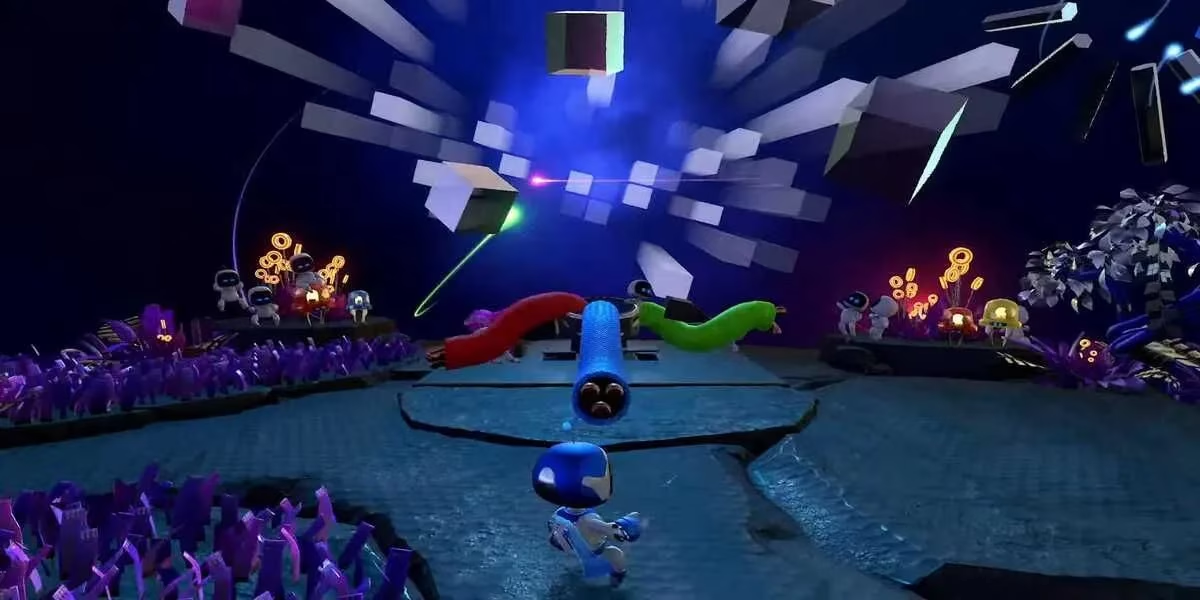
A sudden craving for pure joy made Alex launch Astro\u2019s Playroom next. What a delight it still was. Included free with every PlayStation 5 (and now playable on the PS7 through digital preservation), the platformer had been designed not to sell costumes, but to celebrate the very hardware it ran on. Each elemental stage introduced DualSense haptics so creatively that Alex caught himself laughing aloud at the feeling of rain pattering against his palms. The time trials kept his reflexes sharp, and there was a profound comfort in knowing that no battle pass timer was ticking. The little robot\u2019s adventure was a monument to fun for its own sake.
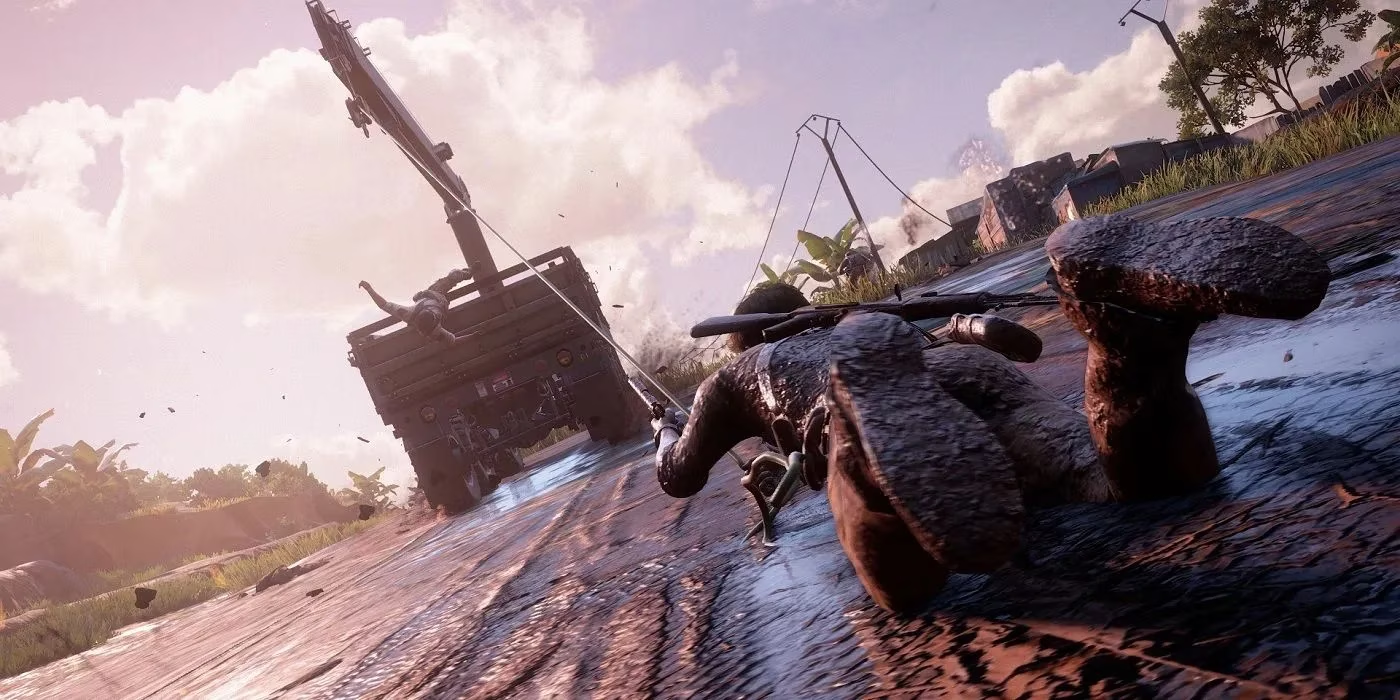
But true storytelling mastery revealed itself when Alex slid the Uncharted 4 disc back into the tray. Nathan Drake\u2019s final outing had never seen post-game story DLC, and the epilogue set a decade later was already woven within. Completing that first playthrough years ago had unlocked a treasure trove of modifiers and cheats\u2014slow motion, infinite ammo, cel-shaded visuals\u2014that transformed the jungle gunfights into a playground. Alex spent a lazy afternoon swapping character skins and exploring Madagascar\u2019s cliffs with no objective in mind. Even the multiplayer, still populated by a loyal community, thrived on randomized chaos and the sheer beauty of its locales. A complete package, no strings attached.
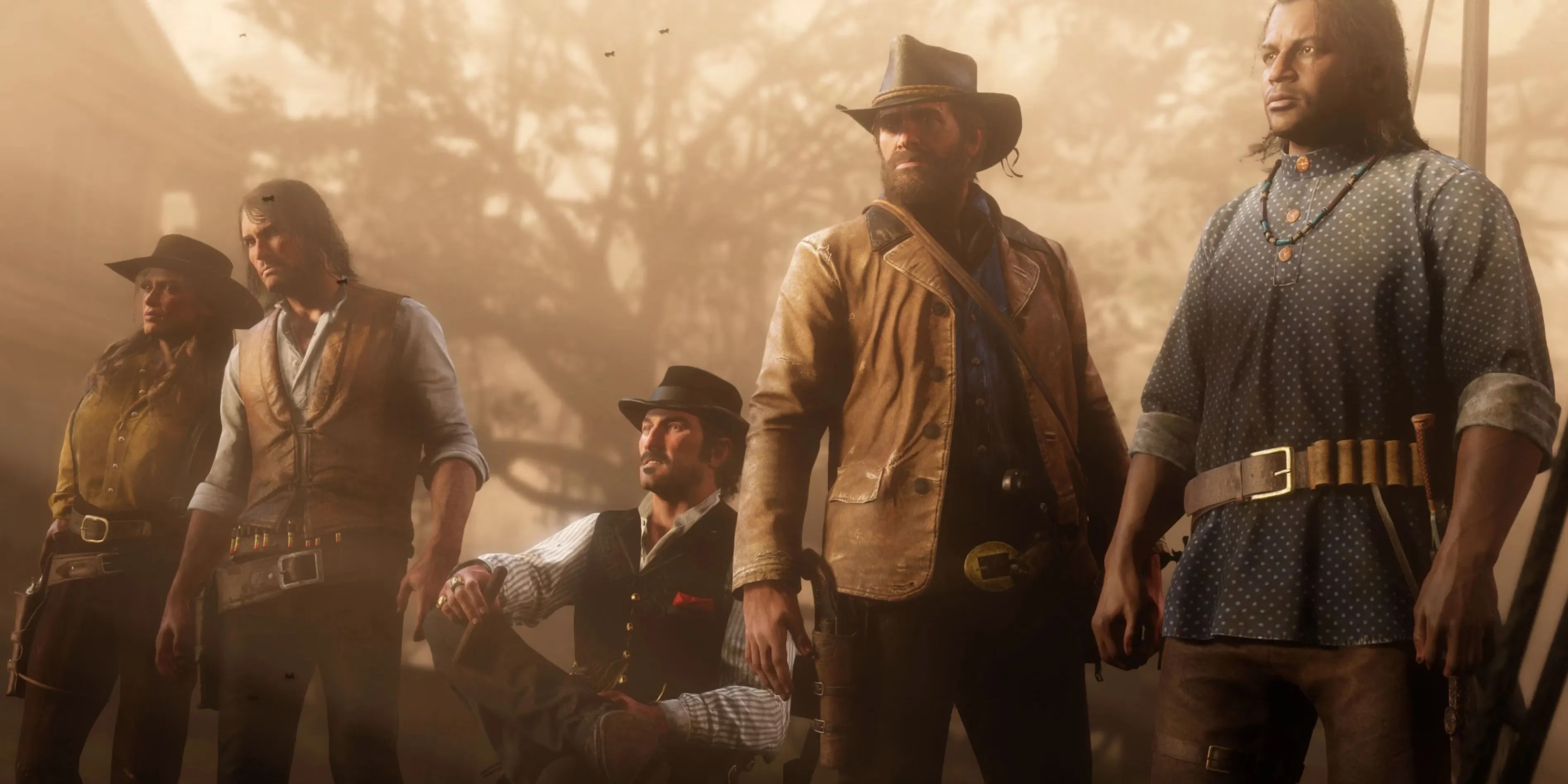
Yet no game in Alex\u2019s collection embodied the concept of a self-contained masterpiece quite like Red Dead Redemption 2. Years after its release, the prequel still refused to receive any story expansions, and somehow that decision preserved its emotional weight. Arthur Morgan\u2019s slow, tragic march toward redemption needed no epilogue. The open world itself was an ecosystem of random encounters, morality consequences, and quiet moments\u2014fishing at dawn, greeting strangers, watching a deer decompose in real time. Alex\u2019s latest playthrough ended very differently from his first because of the honor system, and the online mode gave him a living frontier whenever nostalgia struck. Cowboys didn\u2019t need DLC; they needed sunsets and sorrow.
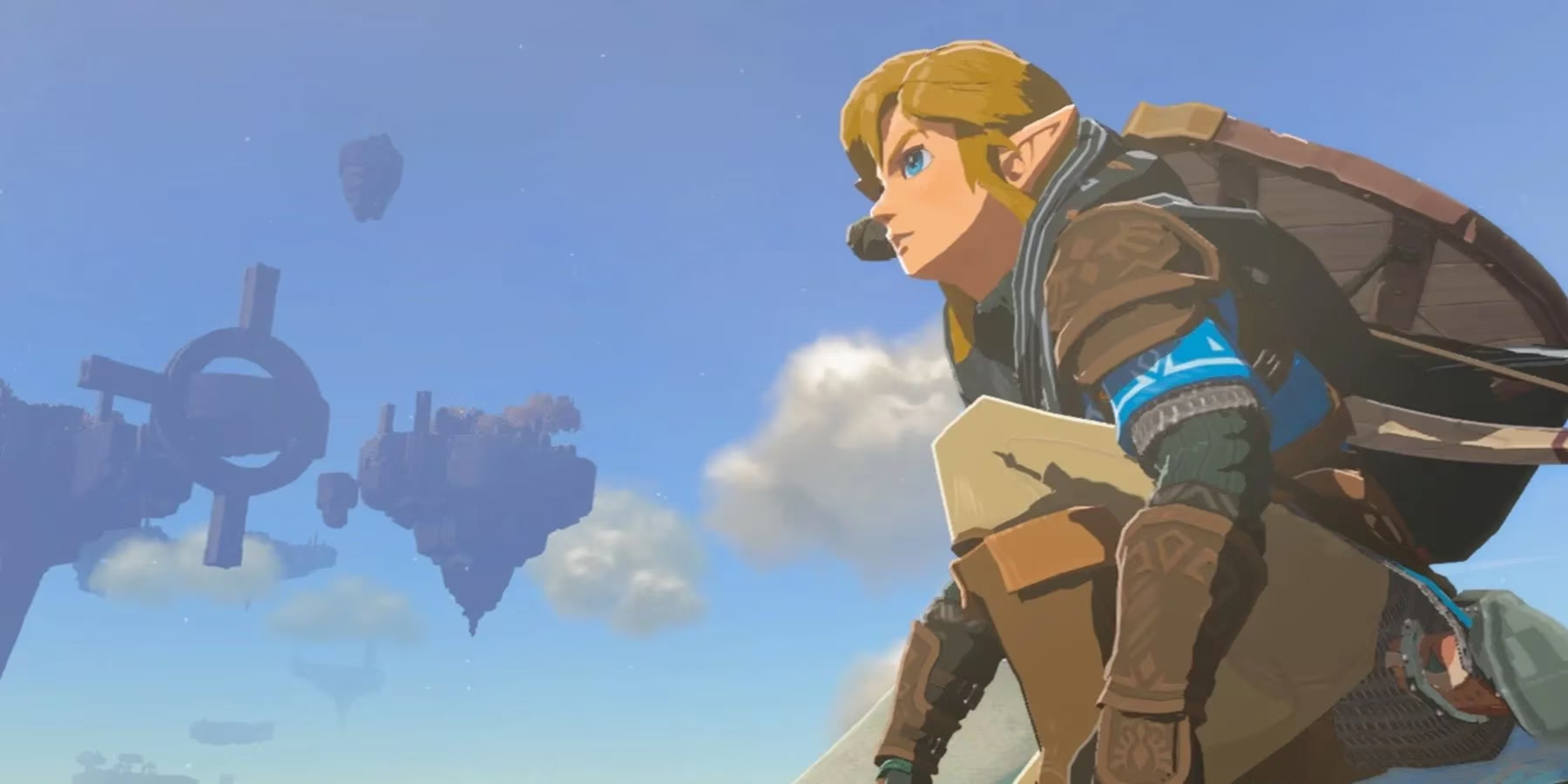
Finally, Alex returned to Hyrule. The Legend of Zelda: Tears of the Kingdom had arrived seven years earlier and never received any post-launch additions beyond minor patches, yet its sky islands and depths were still unmatched in scope. He picked up his old save file and immediately began constructing a flying machine out of a log, two fans, and a steering stick\u2014an absurd invention the developers never explicitly designed but fully encouraged. The story of Link and Zelda exploring beneath the kingdom felt so complete that the absence of DLC seemed like a statement: this is all we wanted to say, and we said it magnificently. Alex spent hours capturing Koroks with homemade catapults, never once missing a season pass.
As the rain subsided and the first hints of dawn touched the holographic screen, Alex powered down his console. The journey through these seven games had reminded him why he fell in love with the medium in the first place. They didn\u2019t demand weekly engagement or credit card top-ups; they simply existed, brimming with heart, awaiting discovery. In 2026, where most titles launched as fragile frameworks to be filled later, these complete experiences felt like cherished heirlooms. Perhaps the truest sign of a great game wasn\u2019t how much it could add after release, but how little it ever needed to. And that, Alex thought with a satisfied sigh, was an art form worth preserving.