Most video games share a universal shorthand for communicating damage to the player. A red bar shrinks, or perhaps crimson jelly smears across the screen corners after taking a bullet. Yet, some titles transcend these basic visual cues, embedding the lasting consequences of a grueling journey directly onto the character's body. They remind us that heroes are not immune to suffering; their bodies become a living diary, chronicling every mistake, every narrow escape, and every heartbreaking loss. From subtle shifts in posture to gruesome wounds that refuse to heal, the visual design itself becomes a narrative device.
In some experiences, time leaves its cruel mark, aging characters across an epic saga. In others, a character\u2019s moral compass influences their physical form, scarring a villainous protagonist while preserving the glow of a virtuous savior. The attention to detail can be breathtakingly subtle, like frostbite creeping across skin after a nap in the snow, or painstakingly obvious, like a glowing surgical ring holding a decapitated head onto a new body.
A Journey Etched in Flesh: Subtle Scars and Severe Trauma
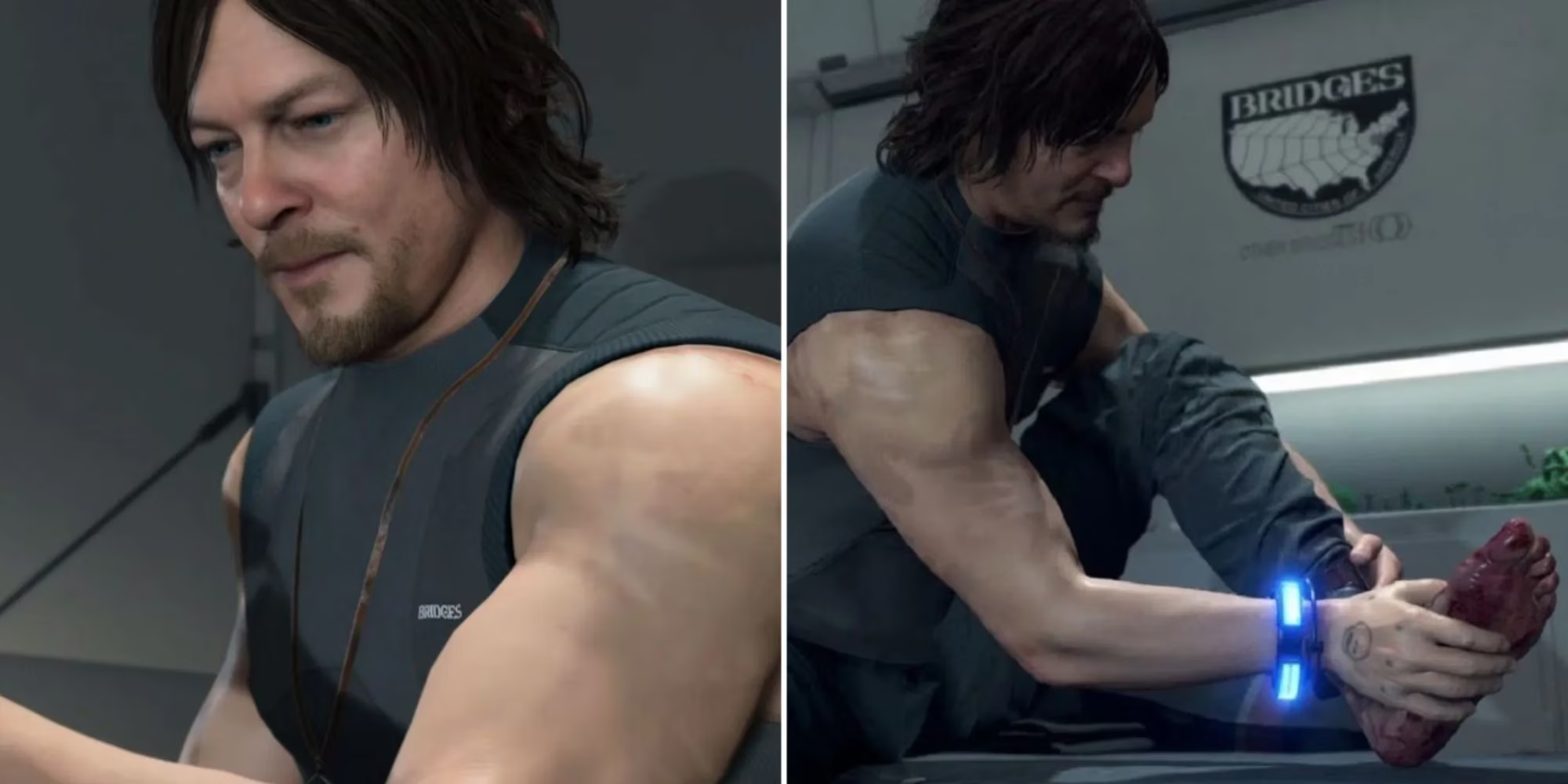
Death Stranding presents a masterclass in deferred visual feedback. Sam Porter Bridges doesn\u2019t change in real-time during the frantic moments of balancing cargo on a cliffside. Instead, the brutal truth is revealed in the quiet sanctity of the private room. Only there does the player notice the blackened, bleeding toenails from trekking without proper boots, or the deep handprint scars rippling across his skin\u2014a metaphysical tattoo obtained with every repatriation from the Seam. It is a quiet, haunting system that highlights the cost of connection.
A Plague Tale: Requiem\u2019s Amicia de Rune, however, wears her trauma on the outside for the world to see. Her descent is a visceral tragedy mapped onto her character model. A head wound she suffers early on leaves a permanent mark after the bandages come off. Later, taking a crossbow bolt to the stomach limits her mobility and stains her clothes. By the story\u2019s devastating climax, her signature long ponytail is hacked off into a rough, short cut, and her brother Hugo\u2019s body is nearly fully consumed by the black veins of the Macula. They emerge from their ordeal fundamentally changed, their appearances reflecting the collapse of their innocence.
Surviving the Unthinkable: Body Horror and Physical Transformation
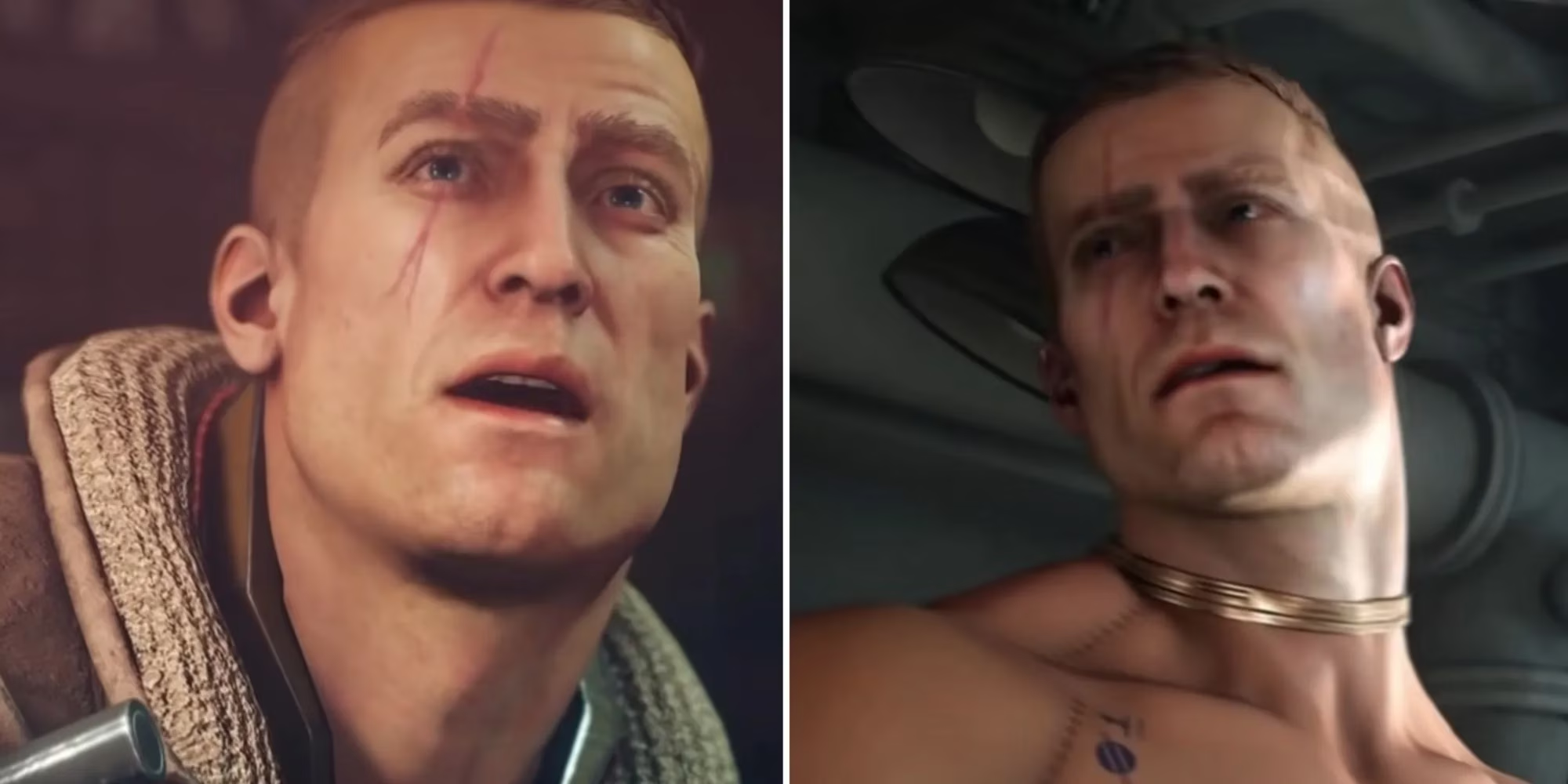
Sometimes, character progression isn't about slow decay but a single, catastrophic event that forever alters a character\u2019s silhouette. Wolfenstein 2: The New Colossus delivers one of the most audacious visual changes in first-person shooter history. After being captured by the sadistic General Engel, war hero BJ Blazkowicz is publicly executed, his head severed in front of a cheering crowd. Rescued by the resistance, his head is surgically grafted onto a super-soldier\u2019s body. For the entire latter half of the game, BJ wears a heavy, metallic ring around his neck, a constant, gleaming reminder of his mortality and rebirth.
This theme of bodily invasion continues in recent horror masterpieces. The 2023 remake of Resident Evil 4 visualizes the parasitic Las Plagas infection with horrific clarity. Upon returning from the village, both Leon Kennedy and Ashley Graham begin to exhibit terrifying symptoms. Blood drips from their noses, dark veins pulse visibly beneath their skin, and their movements become labored. By the time Leon finally reaches the surgical chair to destroy the parasite, his face is a deathly pale mask crisscrossed by a sprawling network of black veins, looking less like a government agent and more like a walking corpse.
Morality, Lifestyle, and the Arc of a Saga
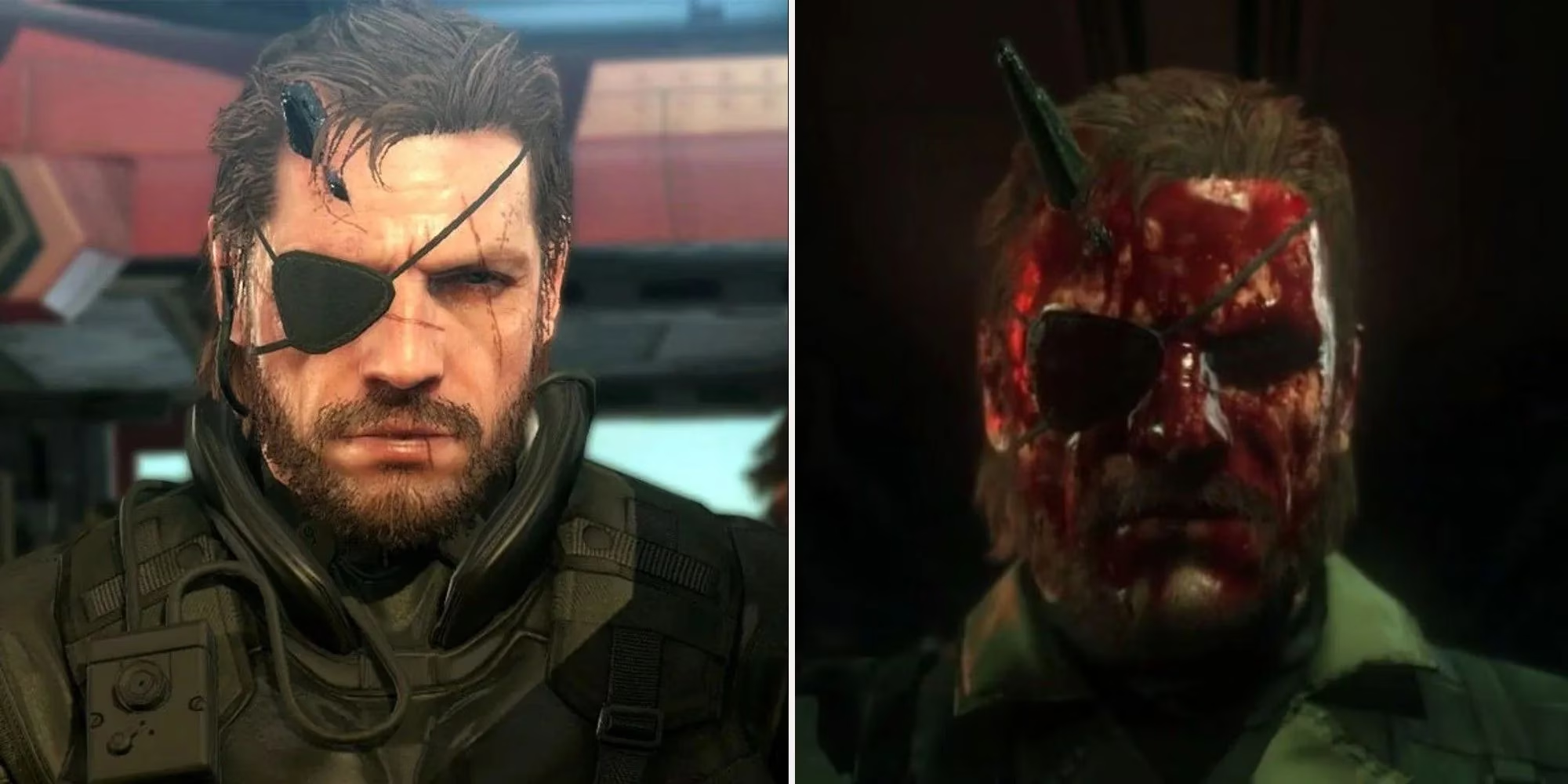
The legendary Hideo Kojima returns in this list not for cinematics, but for a surprisingly subtle gameplay mechanic in Metal Gear Solid 5: The Phantom Pain. The protagonist, Venom Snake, carries a piece of shrapnel embedded in his skull resembling a horn. If the player consistently chooses lethal violence, racking up kills and building a demonic reputation, that shrapnel grows physically longer. Blood becomes permanently caked on Snake\u2019s body, a visual manifestation of the player\u2019s moral decay that turns him into a literal demon.
Mass Effect\u2019s Commander Shepard undergoes a similar paragon/renegade metamorphosis. A pure paragon playthrough keeps the commander looking like a pristine recruitment poster. Conversely, embracing the ruthless renegade path causes the skin around the eyes to redden and crack, with cybernetic scars glowing a hellish red. By the trilogy\u2019s end, a fully renegade Shepard resembles a walking husk, their face a map of violent, glowing fractures.
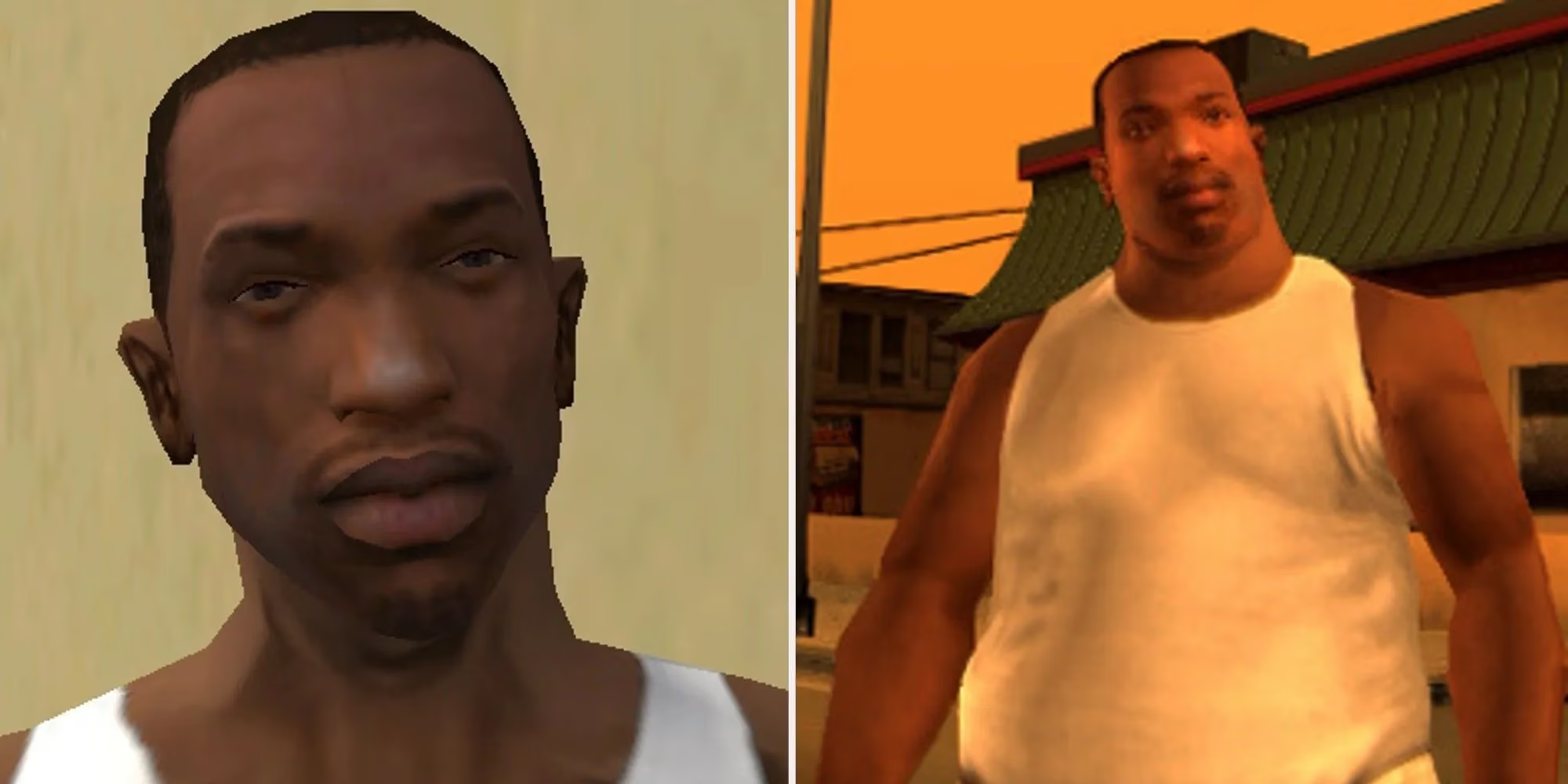
Long before these complex morality systems, Rockstar Games introduced the concept of lifestyle progression to the masses with GTA: San Andreas. Carl \u201cCJ\u201d Johnson\u2019s body is a direct reflection of the player\u2019s habits. Spending hours at the gym transforms CJ into a muscular beast, while a diet heavy on Cluckin\u2019 Bell turns him into an overweight slob with a waddling gait. Rockstar further refined this with Red Dead Redemption 2\u2019s Arthur Morgan, whose hair and beard grow in real-time, and whose waistline expands if he overindulges on camp stew.
The Iconic Rip and Tear: Clothing as a Narrative Device
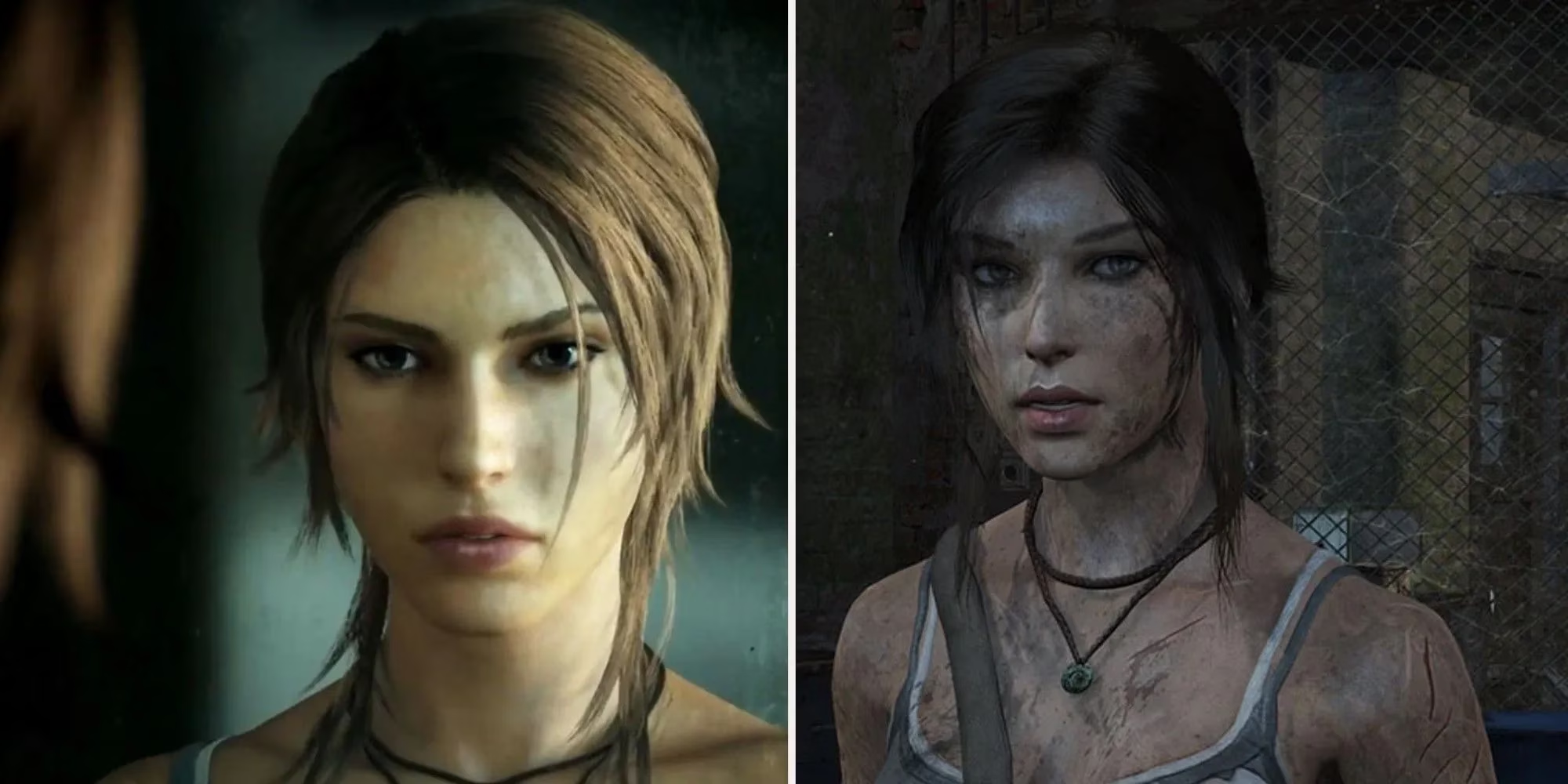
Sometimes, the most effective visual shorthand isn\u2019t a scar, but a shredded shirt. The 2013 reboot of Tomb Raider is a brilliant coming-of-age survival story told through the physical deterioration of Lara Croft. She begins her journey as a prim, academic young woman in a clean tank top. By the time she escapes the burning forests and rivers of blood on Yamatai Island, that same white tank top is a tattered, blood-soaked rag. Her body is covered in mud, lacerations, and burns, visually heralding her evolution from a frightened student into a hardened survivor.
The teen-horror drama Until Dawn applies this logic to an entire ensemble cast. As the night stretches on in the mountain lodge, the characters\u2019 glamorous winter wear is slowly ruined. This progression is best exemplified by Mike, who begins the night as a confident jock wearing a heavy jacket. Depending on the player's choices, he can end up shirtless and battered, potentially even amputating his own fingers in a rusty bear trap. By dawn, every surviving character looks like they\u2019ve walked through the depths of hell, their torn clothing and bruises serving as evidence of the branching narrative\u2019s weight.
Finally, Life is Strange 2 shows the physical cost of brotherhood across an entire road trip. As Sean Diaz shepherds his younger brother, Daniel, across the West Coast, his face becomes a catalog of suffering. He starts as a typical teenager but is gradually worn down by beatings, a dog bite, and exposure. By the episode involving the hospital escape, he\u2019s a gaunt figure with a shaved head and a black eye patch, fighting with everything he has left. These visual details ensure that in the best of games, the real progression bar isn\u2019t just in the pause menu\u2014it\u2019s written all over the hero\u2019s face.