The video game industry, that ever-hungry beast, seems to be having a bit of an identity crisis in 2025. Here it is, gorging itself on multi-year development cycles and budgets that could fund a small moon mission, all to deliver experiences longer than some TV series. But a growing chorus of industry veterans is tapping the glass and asking, "Hey, buddy, maybe you should slow down on the triple-A buffet?" The latest voice adding to this chorus is none other than former PlayStation president Shawn Layden, who's basically suggesting the industry needs a serious reality check—and maybe a smaller plate. Imagine him as a wise, old gardener looking at a wildly overgrown hedge and calmly suggesting it's time for a trim, for everyone's sanity.
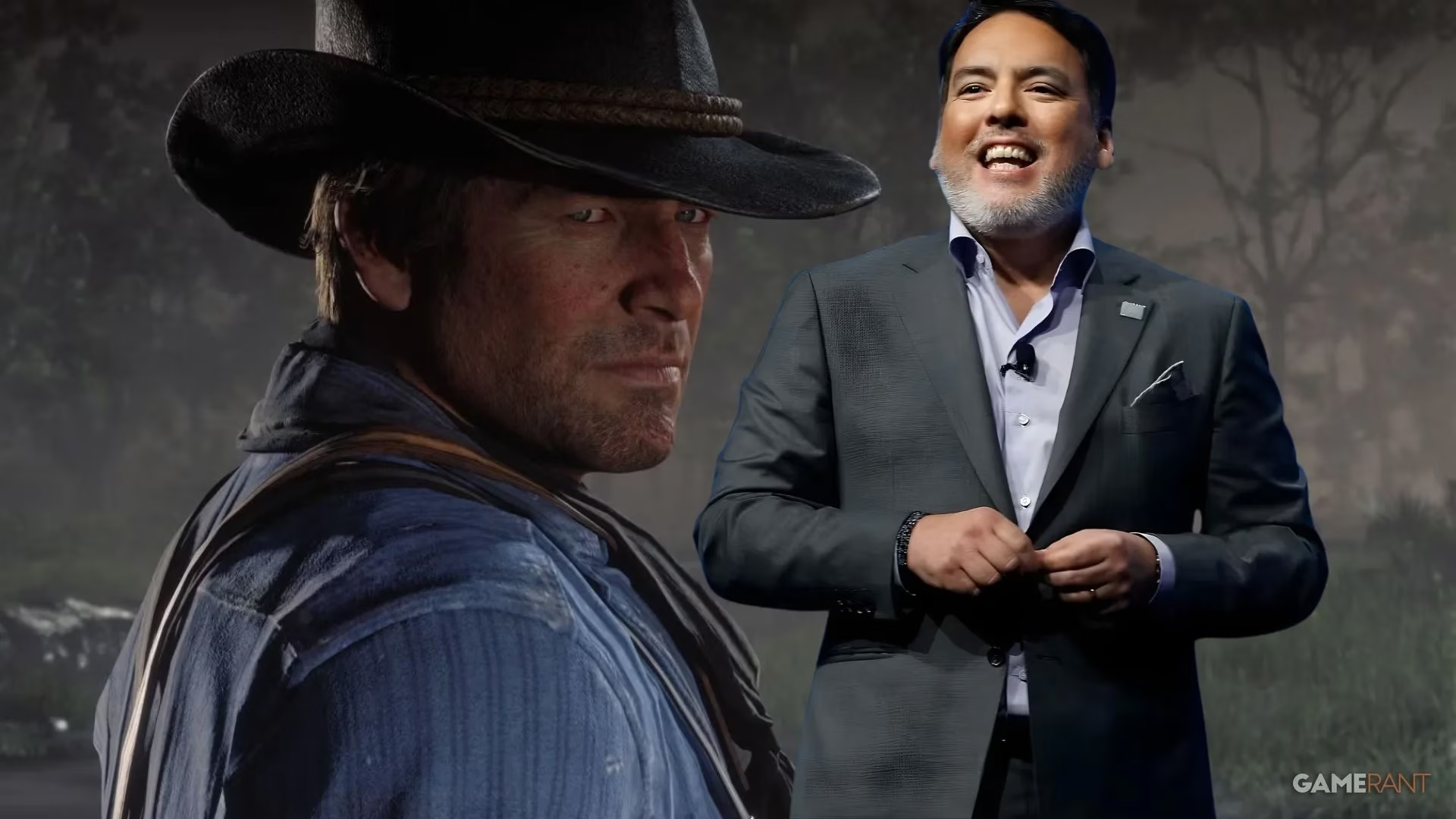
In a recent chat, Layden didn't just hint at the problem; he laid out a prescription that would give most modern studio heads the vapors. "We need to get back into the 2-3 year cycle for games," he declared, advocating for a world where games cost "double-digit millions to make, not triple-digit millions." His ideal gameplay length? A neat and tidy 20 to 25 hours. Phew. That's a far cry from the sprawling, hundred-hour epics that have become the industry's calling card. It's like suggesting a four-course meal is better than an all-you-can-eat feast that leaves you in a food coma for a week.
And get this—he's not alone in this line of thinking. Will Shen, a former Bethesda developer who helped cook up behemoths like Starfield, recently chimed in, saying players are getting "fatigued." That's industry-speak for "my backlog is giving me anxiety dreams." These guys, who've built careers on massive worlds, are now whispering that maybe, just maybe, less could be more. It's a classic case of 'it takes one to know one'.
So, why the sudden push for moderation? Layden points the finger at us, the players. The average gamer isn't a teenager with endless summer vacations anymore; they're in their 30s, juggling jobs, families, and the eternal struggle to remember what's in the back of the fridge. "Not everybody has 88 hours to play Red Dead Redemption 2," Layden quipped. And let's be real, he's got a point. That game is a masterpiece, but committing to it feels less like playing and more like taking on a second, very beautiful, very horse-heavy job.
| The Big Debate: Epic vs. Compact | | :--- | :--- | | The Case for Epic (The 'More is More' Camp) | The Case for Compact (The 'Less is More' Camp) | | Games like Baldur's Gate 3 prove players will invest time in quality. | The average gamer's age (30s+) means less free time. | | Provides immense value for money. | Reduces developer burnout and insane budgets. | | Creates deep, immersive worlds. | Allows for more creative risks and a greater variety of games. | | It's what fans of franchises like The Witcher expect. | Helps combat player fatigue and overwhelming backlogs. |
But here's the million-dollar (or hundred-million-dollar) question: can the industry actually pull this off? Look at CD Projekt Red, boldly claiming it will deliver three new Witcher games within six years. Fans are thrilled but also side-eyeing that timeline harder than a suspicious cat. Can they maintain that epic Witcher 3 magic on a shorter schedule? It's the big gamble on the table.
Meanwhile, Rockstar is quietly polishing Grand Theft Auto 6, an entity so anticipated it probably has its own gravitational pull, likely destined to be another colossal time-sink. And over in a galaxy far, far away, the fate of Star Wars: Fate of the Old Republic hangs in the balance, with whispers of long waits making players nervous. The tension is palpable: the industry's biggest beasts are still building monuments, while others are wondering if we need more cozy cottages.
Layden's argument goes beyond just player convenience. He's worried about the health of the ecosystem itself. These gargantuan projects hoover up talent and resources like a black hole, meaning fewer games get made overall. His vision is one of diversity: more people making more games, more often. It's a shift from building a single, perfect skyscraper to creating a vibrant, interesting neighborhood.
So, what's a gamer to think in 2025? The truth is, there's room for both. The gaming landscape shouldn't be a monolith. We can have our breathtaking, once-in-a-decade epics and our sharp, focused, 20-hour thrill rides. The hope is that Layden's words spark a conversation that leads to more choice. Because sometimes you want a seven-course tasting menu, and sometimes you just want a really, really good burger. And the industry should be able to serve both without going bankrupt or burning out its chefs. The future might not be about choosing sides, but about enjoying a much more varied and sustainable menu. Now, if you'll excuse me, I have approximately 1.7 hours of free time tonight before I need to sleep... what should I play?