In the vast and ever-evolving landscape of open-world video games, one of the most compelling and immersive design philosophies is the ability to experience the game world through the eyes of multiple distinct characters. As of 2026, this narrative technique has become a hallmark of depth and replayability, allowing players to craft unique stories and see familiar settings in a completely new light. The capacity to inhabit different avatars, each with their own motivations, skills, and social standing, fundamentally transforms the player's relationship with the virtual environment and its inhabitants. This approach goes beyond mere cosmetic changes, offering nuanced gameplay variations and emotional depth that a single protagonist often cannot provide.
🎮 Red Dead Redemption 2: From Arthur Morgan to John Marston
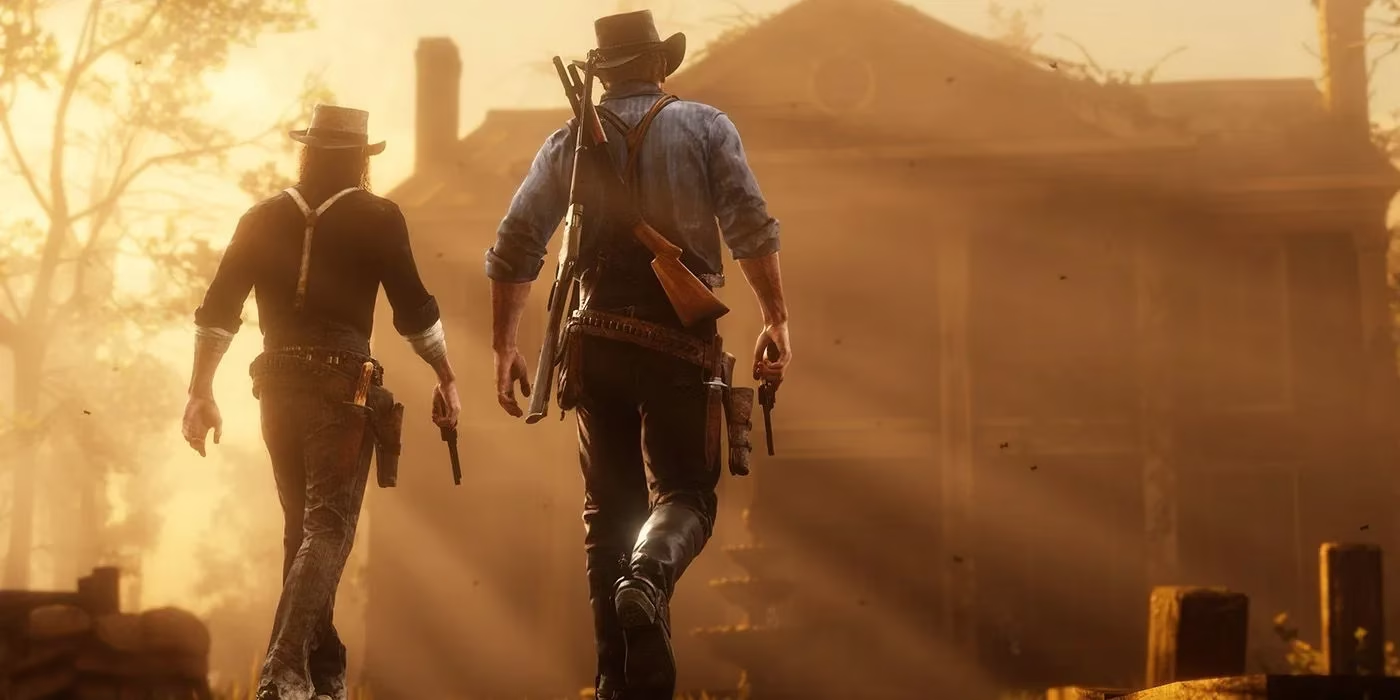
The epic tale of Red Dead Redemption 2 is primarily told through the weathered eyes of Arthur Morgan, a complex outlaw grappling with loyalty and redemption. However, in a masterful narrative shift, players eventually assume the role of John Marston, the protagonist of the original game. This transition is more than a simple character swap; it's a profound shift in perspective. While both men are products of the dying Wild West, their personalities and worldviews differ significantly. Exploring the same sprawling landscapes as John offers a poignant, reflective experience. Players can revisit locations and converse with NPCs who now share their memories of Arthur, creating deeply emotional and bittersweet moments that enrich the game's narrative tapestry. The world itself feels different when viewed through John's more grounded, family-oriented lens.
⚔️ Kingdom Come: Deliverance – A Woman's Lot
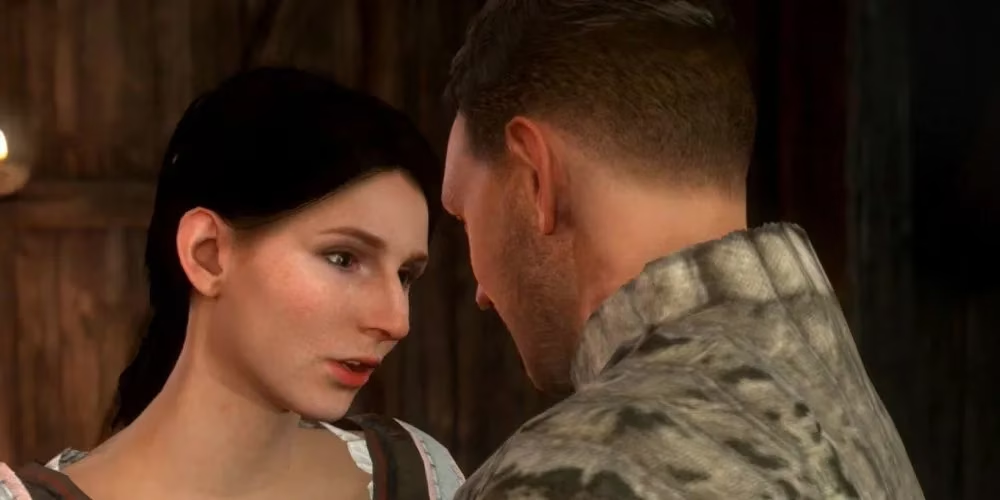
The historically rich world of Kingdom Come: Deliverance is initially experienced through Henry, a blacksmith's son thrust into a brutal conflict. The base game provides a very specific, male-centric view of medieval Bohemia. The brilliant A Woman's Lot DLC completely recontextualizes this world by allowing players to step into the shoes of Theresa, Henry's love interest. This expansion isn't just a side story; it's a vital counterpart to the main narrative. As Theresa, players confront the horrors of war from a drastically different social position, with a distinct set of skills focused on stealth, dialogue, and survival rather than open combat. Her journey during the sack of Skalitz highlights the often-untold struggles of women in wartime, adding immense emotional weight and historical depth to the game's setting.
🕷️ Marvel's Spider-Man 2: Dual Heroes and Beyond
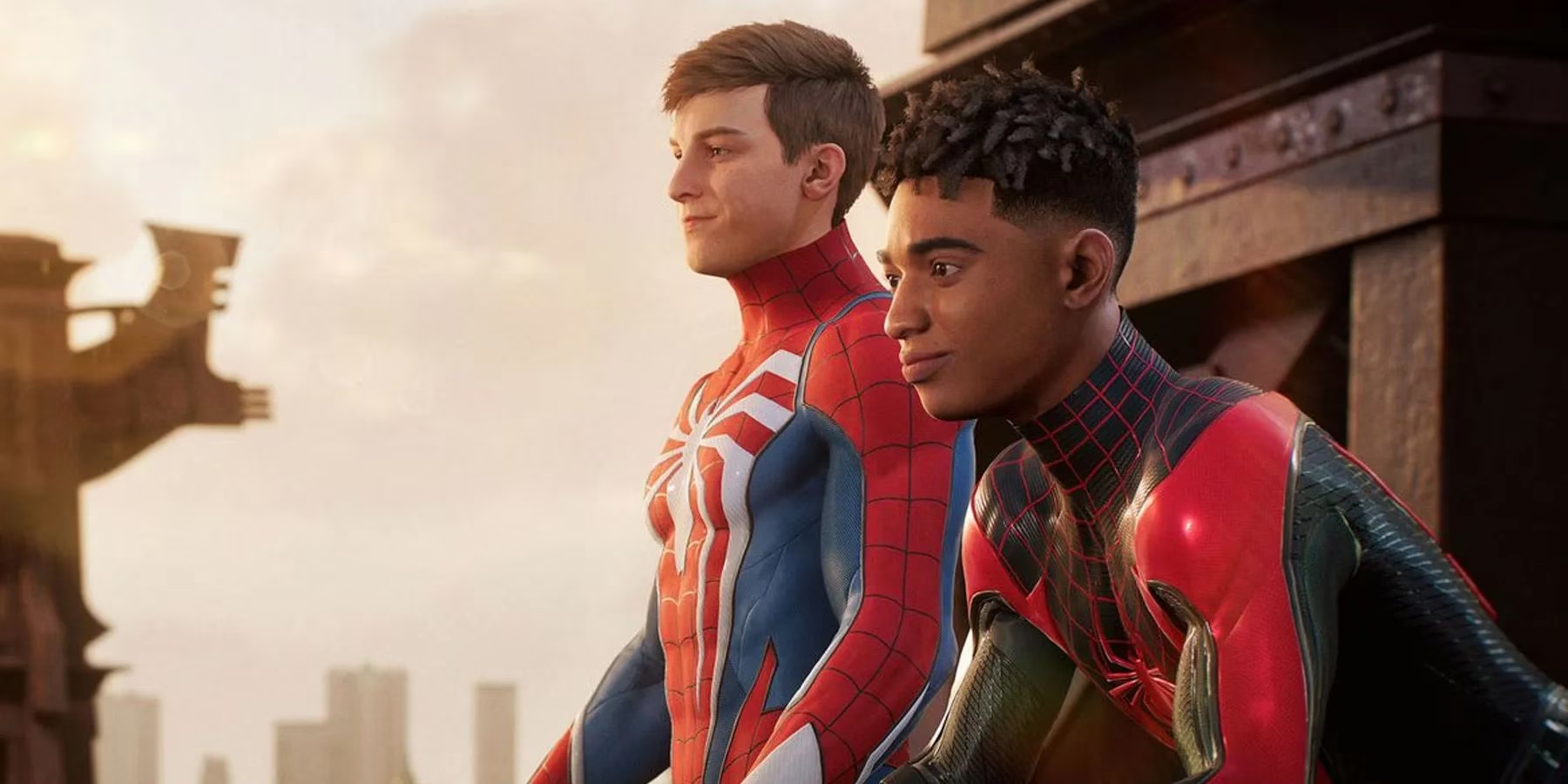
Marvel's Spider-Man 2 perfected the superhero open-world formula by seamlessly integrating two primary protagonists: the experienced Peter Parker and the rising hero Miles Morales. The game's innovative feature allows instantaneous switching between the two Spider-Men during free roam, each bringing a unique flavor to web-swinging through New York City.
| Character | Key Abilities | Narrative Role |
|---|---|---|
| Peter Parker | Symbiote powers, advanced tech | The seasoned mentor facing personal demons |
| Miles Morales | Bio-electric Venom attacks, camouflage | The confident successor carving his own path |
Beyond the dual protagonists, the game occasionally shifts perspective to other key figures like Mary Jane Watson, offering thrilling stealth sequences, and even the monstrous Venom, providing raw, destructive power. These shifts aren't gimmicks; they are carefully crafted narrative tools that expand the player's understanding of the conflict and the city itself.
🐉 Baldur's Gate 3: A Tapestry of Infinite Perspectives
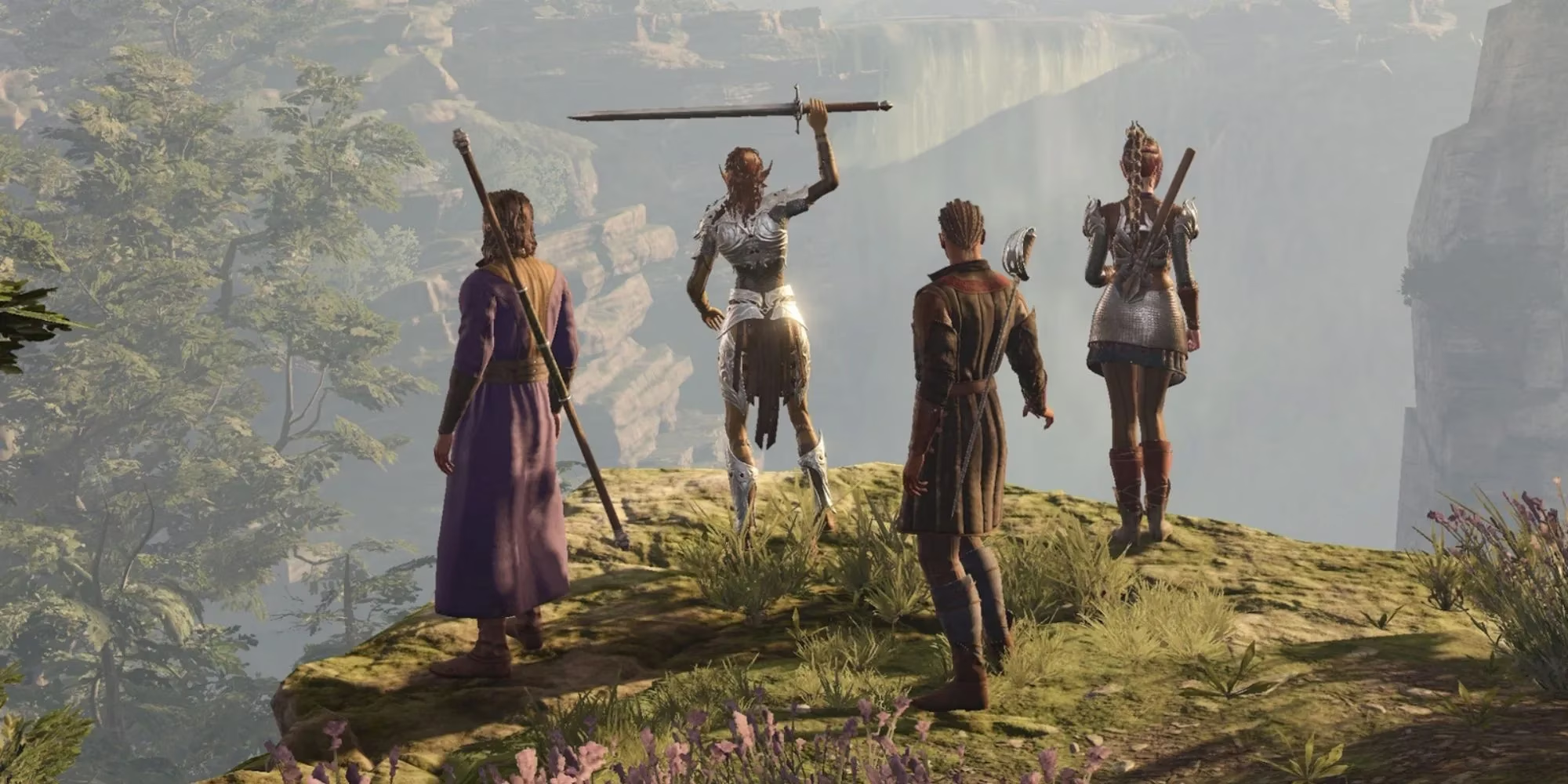
Widely acclaimed as a landmark RPG, Baldur's Gate 3 elevates the concept of multiple perspectives to an art form. Players begin by choosing an Origin character—each with a fully realized, intricate backstory—or crafting their own custom hero. The true magic lies in the party system. Companions like the vampire spawn Astarion, the cerebral wizard Gale, or the devout cleric Shadowheart are not just followers; they are alternate protagonists waiting to be controlled.
Key features that enable this multi-perspective design include:
-
Origin Playthroughs: Every major companion can be selected as the main character, offering a unique storyline and personal quests.
-
Dynamic Dialogue: Every conversation changes based on which character is speaking. A situation handled by the diplomatic Wyll will unfold differently than if the ferocious barbarian Karlach took the lead.
-
Party Control: Players can directly take control of any party member at any time outside of dialogue, using their specific skills for exploration, combat, and puzzle-solving.
This design creates a genuinely reactive world where the narrative is a collaborative story told from countless angles, making each playthrough a unique experience.
💰 Grand Theft Auto V: The Triple-Protagonist Blueprint
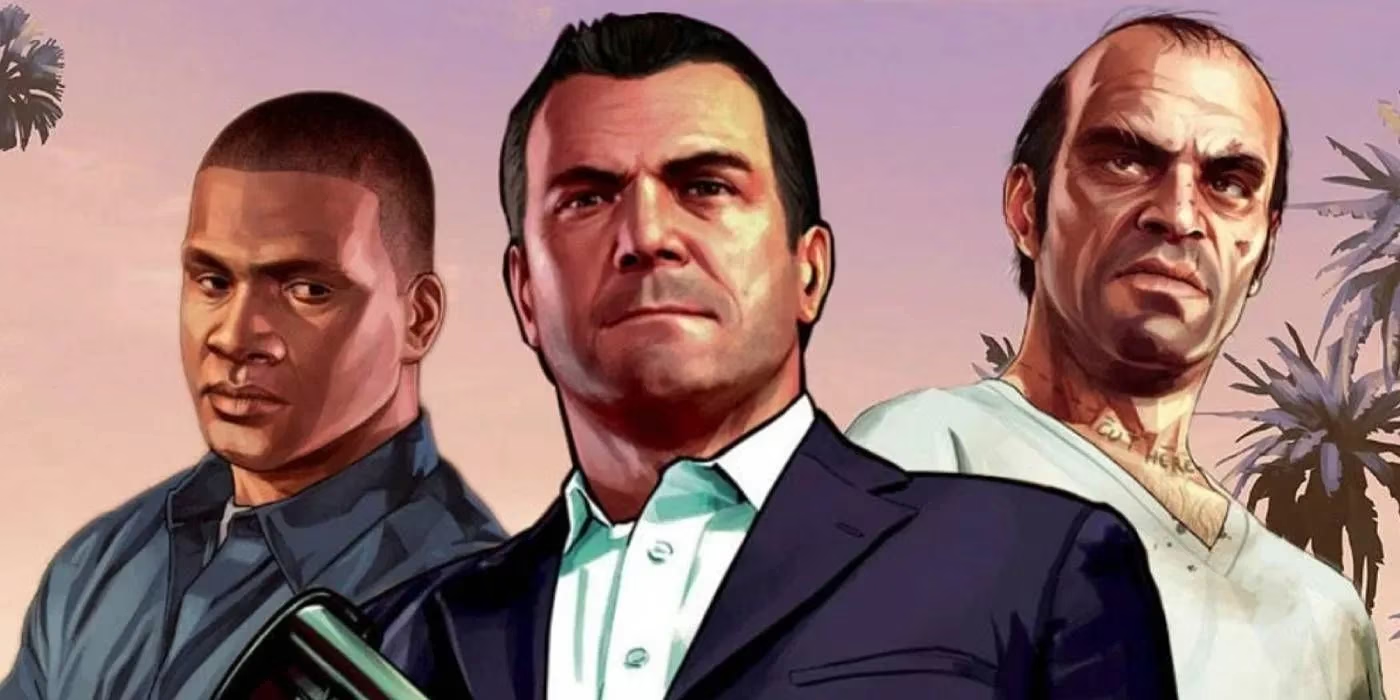
Rockstar Games' genre-defining Grand Theft Auto V revolutionized open-world storytelling with its trio of protagonists. Michael, Franklin, and Trevor are not just alternate skins; they are three deeply flawed men whose lives violently intersect in Los Santos.
-
Michael De Santa: A retired bank robber living a hollow life of luxury in witness protection, plagued by family dysfunction.
-
Franklin Clinton: A ambitious young hustler from the streets, seeking a way out and often serving as the audience's entry point and the group's moral compass.
-
Trevor Philips: A volatile, anarchic force of nature, representing the unfiltered id of the GTA universe.
The game's pioneering character-switching mechanic allows players to jump between their lives at will during free roam, each with their own hobbies, hangouts, and narrative arcs. Missions often cleverly intertwine their perspectives, requiring coordinated efforts from all three. This structure provides an unparalleled scope, presenting a satirical portrait of modern America from three wildly different, yet interconnected, social strata.
Why Multiple Perspectives Matter in Modern Gaming
As we look at the gaming landscape in 2026, the trend of offering multiple perspectives is stronger than ever. It addresses the core desire of players in an open-world game: genuine agency and deep immersion. This design philosophy provides several key benefits:
-
Enhanced Replayability: Experiencing the world through another character's eyes makes subsequent playthroughs feel fresh and new.
-
Richer World-Building: A city or kingdom feels more alive and believable when it reacts differently to a noble knight versus a desperate thief.
-
Deeper Emotional Connection: By understanding the motivations and struggles of various characters, players form a more complex and emotional bond with the game's story.
-
Gameplay Variety: Different characters often come with unique mechanics, abilities, and skill sets, preventing gameplay from becoming monotonous.
From the lawless frontiers of the past to the superhero-infested streets of the future, the power to change perspectives remains one of the most effective tools for creating memorable, dynamic, and profoundly engaging open-world adventures. It transforms the player from a mere tourist into a true inhabitant of the game's universe, capable of understanding its heart and soul from every conceivable angle.