Let me tell you, as I was galloping through the swamps north of Saint Denis in 2026, I almost missed it. A quiet field, the distant chug of a train, and there it was—a simple, hand-carved wooden marker, standing like a forgotten tooth in the gum of the earth. In a game world bursting with outlaws and gunfights, this silent sentinel stopped me dead in my tracks. Red Dead Redemption 2 isn't just a game; it's a time machine, and sometimes it takes you to places so real, so tragically accurate, they feel less like pixels and more like ghosts whispering from your screen.
The Silent Sentinel: A Grave Without Names
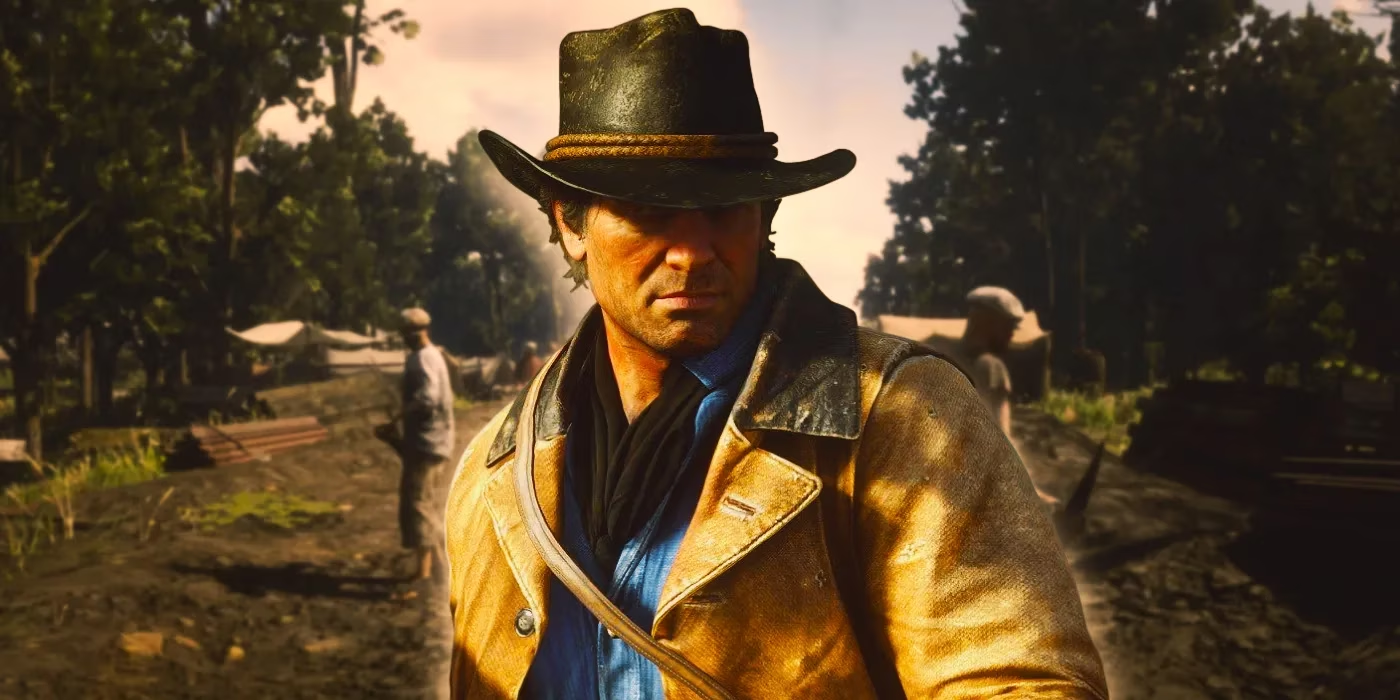
This marker, folks, is a masterpiece of heartbreaking subtlety. It memorializes 12 nameless souls who died between May and July of 1878. No grand epitaphs, no flowing script—just a number. And that's the whole, devastating point. Rockstar Games, those narrative sorcerers, used this tiny, almost missable detail to reference one of America's most buried shames: the countless Chinese immigrant laborers who died building the railroads that stitched this nation together. Their identities were erased with the efficiency of a steamroller; foremen's sheets often listed them as a single, faceless entity. Finding this grave felt like uncovering a secret ledger of the forgotten, a data point in a history written in blood and sweat.
While the specific mass grave is fictional, the truth it points to is harder than the granite those men blasted through. Many were buried in unmarked plots right beside the very tracks they died building. To think that in 2026, we're still piecing together their stories from soup spoons and broken pottery found in archaeological digs—it turns this virtual grave into a portal. It's not just a game asset; it's a historical scar rendered in polygons, a ghost town of memory waiting for someone to listen.
The Real History: Building a Nation on Broken Backs
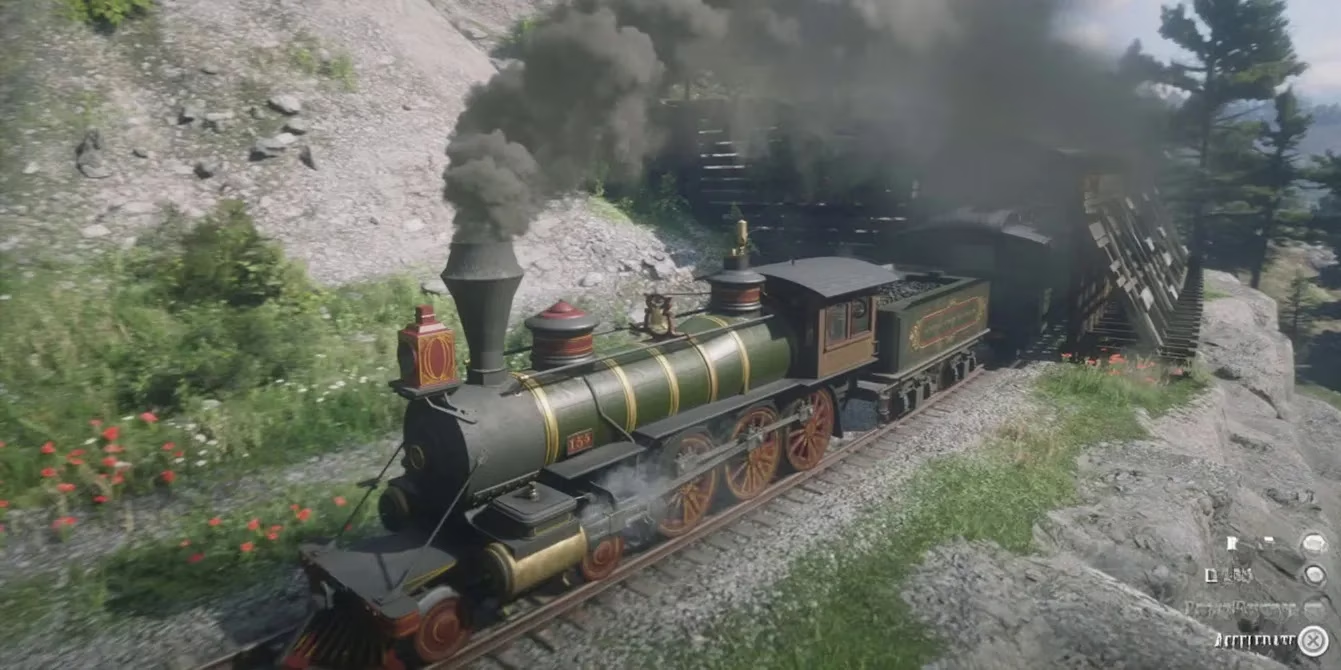
Let's set the scene. The late 1800s. The railroad was the internet of its day—a roaring, profit-spewing beast that collapsed time and distance. Titans like Stanford and Vanderbilt became legends, their names plastered on streets we walk today. But their empires were built on a foundation few remember. After the Taiping Rebellion ravaged China, thousands sailed to America dreaming of gold. What many found was a different kind of mountain: the Sierra Nevada.
Here are the brutal facts that make my controller feel heavy:
-
The Workforce: At its peak, an estimated 12,000 Chinese immigrants, some as young as 12, worked on the Transcontinental Railroad. They were the backbone of the Central Pacific's effort.
-
The Danger: Their job was to perform miracles of brutality. Blasting tunnels through solid rock with nitroglycerin was as routine as hammering spikes for 12 hours a day. The death toll? Unknown. Their employers didn't bother counting.
-
The Injustice: The pay disparity was a crime. They earned less for more dangerous work and had to pay for their own tools, food, and lodging—all provided free to white workers. They were treated with a contempt so thick you could spread it on bread.
And the ultimate insult? When the final "Golden Spike" was driven in 1869, celebrating the connection of a continent, not a single Chinese worker was invited to the ceremony. Their contribution was airbrushed from the official portrait faster than a TikTok trend fades. They were the invisible architects of the West, their labor as essential and unacknowledged as the rebar in a skyscraper.
Saint Denis: A Digital Memorial to a Lost World
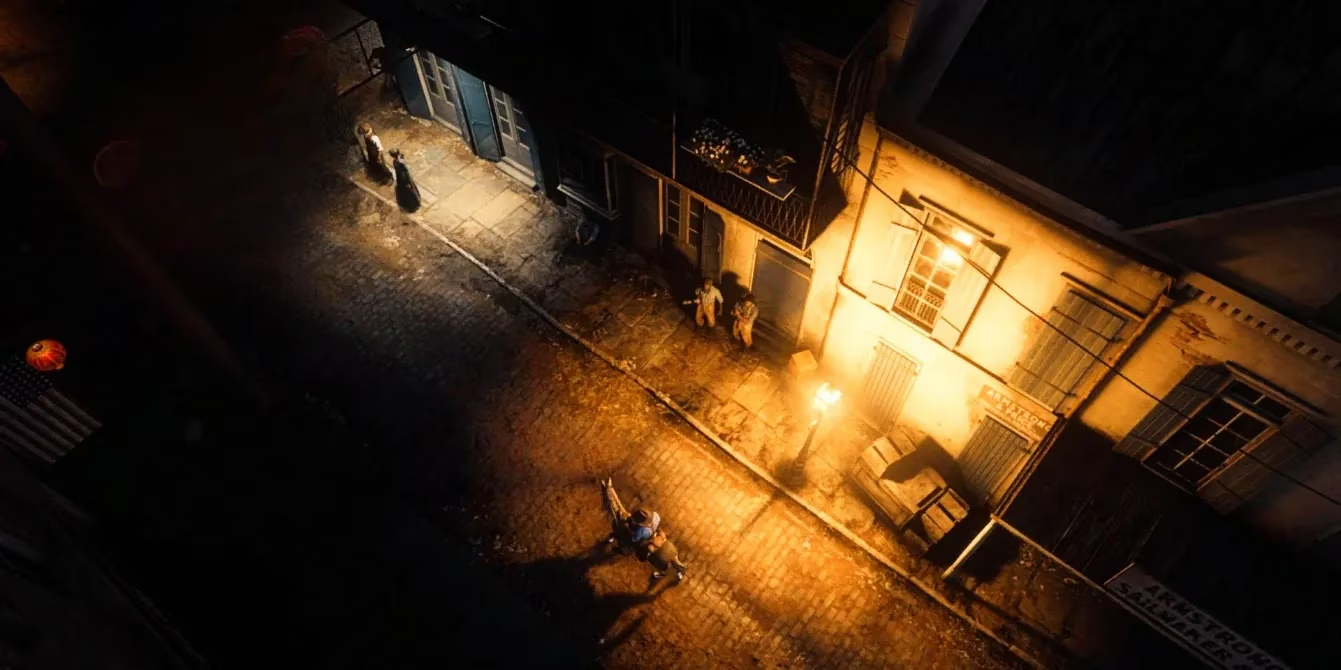
But the grave isn't the only nod. Wandering the rain-slicked streets of Saint Denis (Rockstar's love letter to New Orleans), I stumbled into another revelation: a fully realized, period-accurate Chinatown. The signs are in Chinese, the businesses have Chinese names, and if you listen closely, you can hear accurate snippets of Cantonese. It's a vibrant, living community.
This, my friends, is another ghost. New Orleans' original Chinatown was erased in 1937 by federal "redevelopment." What exists in RDR2 is a digital resurrection, a lovingly crafted "what if" of a culture that was forcibly displaced. Exploring it in 2026 feels profoundly melancholic. This isn't just world-building; it's historical preservation through code, a museum exhibit you can rob, fight in, and ultimately, learn from.
Why This Detail Hits Like a Dynamite Blast
So why does this all matter? In an age where games are often disposable entertainment, RDR2 uses its immense power for something more. That unmarked grave is a silent teacher. It doesn't preach. It doesn't have a quest marker. It just is. For players who know the history, it's a solemn, respectful nod. For those who don't, it's a mystery that can lead to a real-world education—a spark that can light up a dark corner of the past.
It proves the developers didn't just make a cowboy simulator; they engaged in deep, empathetic research. They understood that history isn't just about the robber barons in their mansions, but about the unnamed thousands whose dreams became the gravel beneath the tracks. Finding that grave was like finding a single, preserved tear in a fossil—a tiny, crystalline record of immense, collective sorrow. It reminds us that the myth of the American West was built on a reality far more complex, cruel, and human than the legends usually allow. And in 2026, that's a lesson worth riding hell-for-leather to discover.