We all remember that final, sun-scorched duel in Red Dead Redemption, and the hollow feeling when the credits rolled on Jack Marston. By 2026, the wait for a proper follow-up feels almost cruel, but Rockstar has left the perfect breadcrumbs. Jack is the last Van der Linde orphan standing, and his timeline sits on the brink of a world-changing event: World War I. Honestly, the pieces for a jaw-dropping backstory are just lying there, begging to be picked up — and it all could mirror one of Rockstar's most underrated protagonists in the darkest possible way.
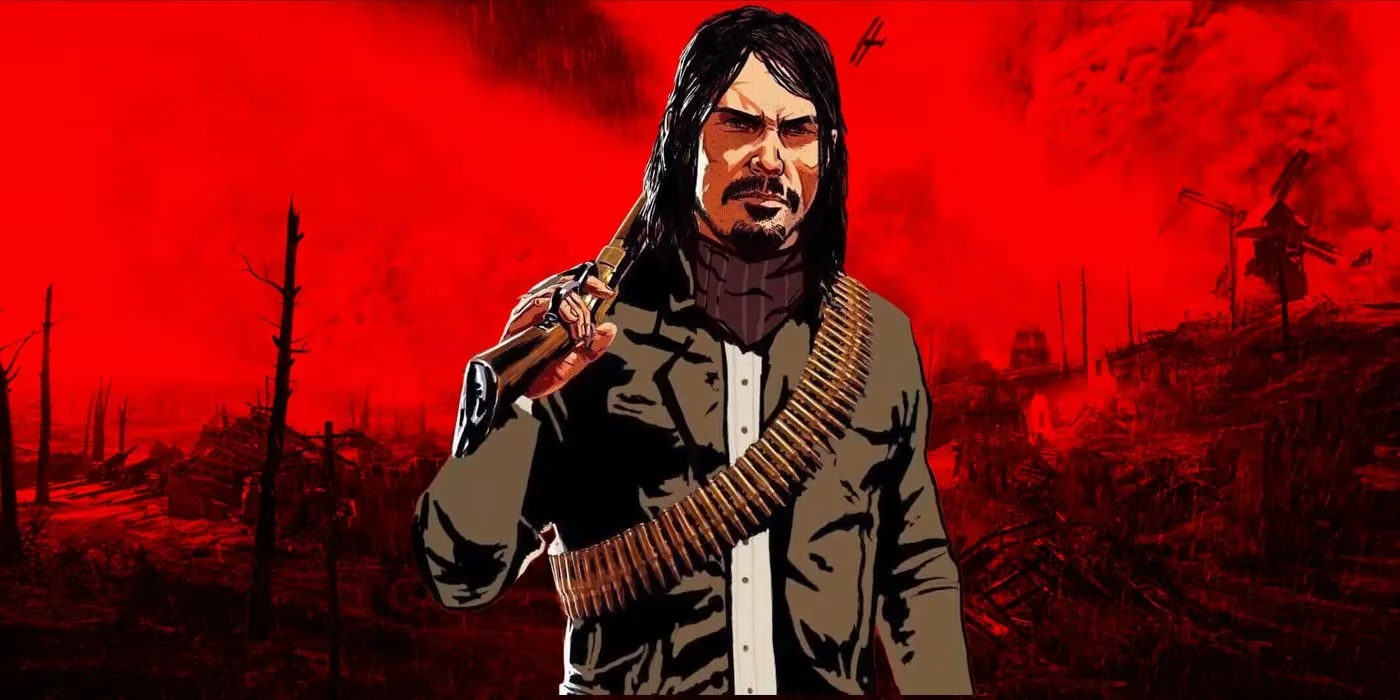
Think about it. After gunning down a retired federal agent in 1914, Jack isn't just some drifting cowboy with daddy issues. He's a wanted man with a bullet where his childhood used to be. The U.S. government took everything from him — first kidnapping him and his mother to blackmail John, then executing that dirty betrayal. By the time the Selective Service Act rolls around in 1917, Jack is 22 and more than physically capable. But signing up willingly? Not a chance. Where the law sees a draft dodger, Jack sees the same machine that murdered his father. That alone is a goldmine for a story about radicalization.
That's when I start thinking about Vito Scaletta from Mafia 2, you know? Pinned down by the system, he takes the military deal to dodge a prison cell. Jack Marston could walk the exact same road, except with none of the mafia dreams afterwards. Picture a prologue where you're not running from the law on horseback, but crouched in a muddy trench.
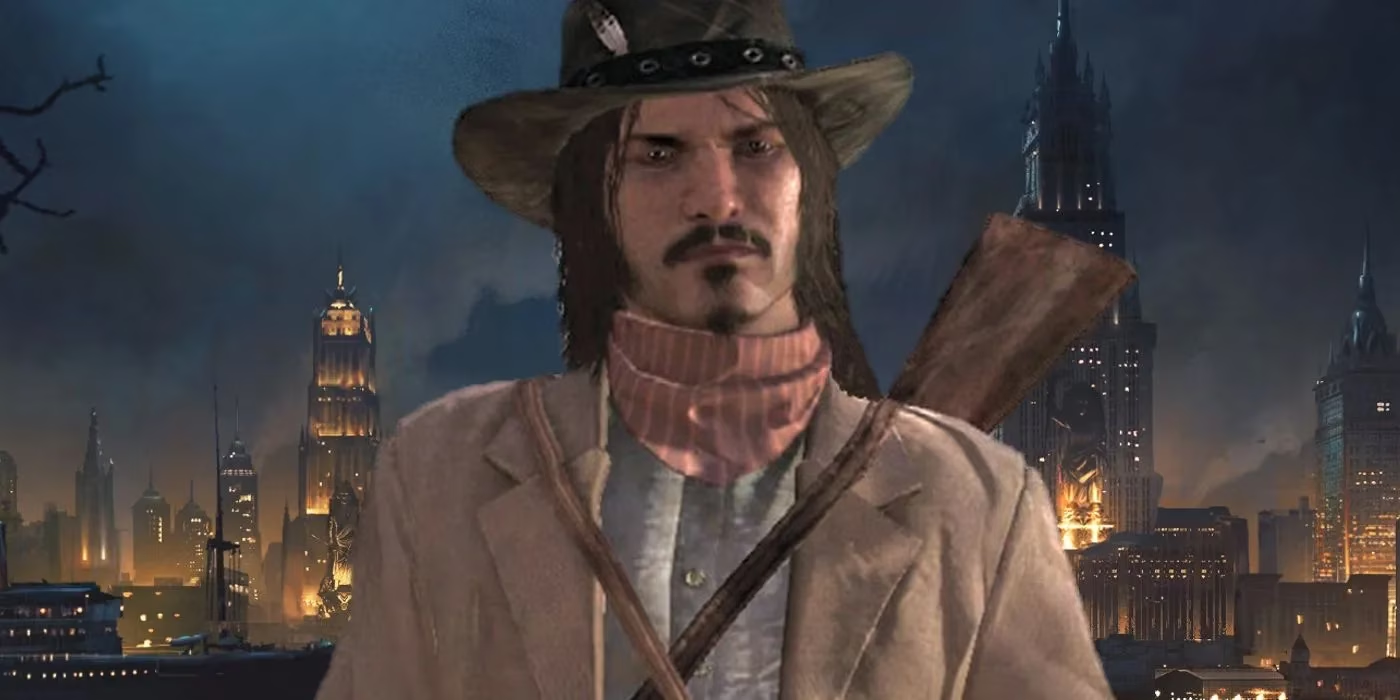
But here's where it gets really interesting. Rockstar already told a post-war story with Cole Phelps in L.A. Noire, and flipping that script for Jack Marston would be storytelling genius. Cole was the Silver Star officer who came home, built a family, and clawed his way up the LAPD ladder to bury his guilt. On paper, he looked like a hero. Jack's version? It’d be the funhouse mirror reflection — hollow, jagged, and twisted by righteous fury.
Instead of medals pinned to a chest for courage he didn’t earn, Jack would be the terrifyingly competent soldier his commanders can’t control. He'd have his own code on the battlefield, forged from everything Dutch van der Linde preached and then betrayed. His fellow soldiers would love him for it. The officers would loathe him. That contrast alone sets up a dynamic Cole never faced. Cole sought redemption through order; Jack would find purpose in chaos. After the armistice in 1918, there's no wife, no picket fence, no desire to hand out traffic tickets. He’s got nothing to return home to except a head full of untreated trauma and a very specific set of skills.
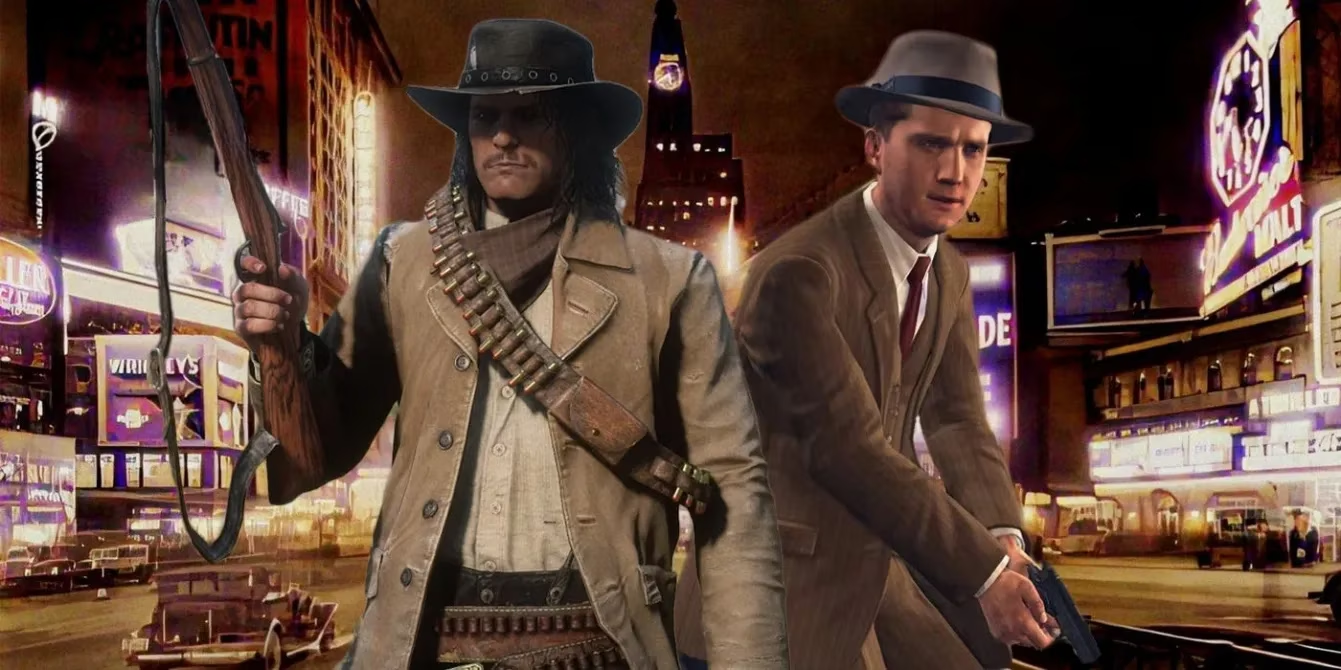
That's when the Red Dead Redemption 3 narrative could really crack open. The Van der Linde gang is dead and buried, but the hunger for brotherhood isn't. Imagine Jack drifting back to a rapidly industrializing America, crossing paths with other disgruntled veterans — men with missing limbs and invisible wounds the government is happy to ignore. Instead of finding peace like Cole pretended to, Jack could become the nucleus of a new gang. Not outlaws in the old sense, more like a radicalized post-war brotherhood that sees the system itself as the enemy. They’d rob not for survival, but for revenge and twisted ideology. And you, the player, would have lived every step of that descent.
I won't lie, that kind of arc feels terrifyingly timely even in 2026. The Old West was already dying by 1899, but a story set in the early 1920s would force you to watch it be paved over by concrete and military regulation. Jack wouldn't just be fighting the Bureau agents anymore; he'd be fighting the entire 20th century. The genius of using a Cole Phelps dark reflection is that it ties Jack’s journey directly into Rockstar’s own thematic DNA without retreading the cowboy tropes we've already mastered in two games. Where Phelps climbed the ladder inside the establishment, Jack would be trying to burn it down from the outside.
Rockstar is deep in Grand Theft Auto 6 territory right now, so a third Red Dead is years off. That’s okay. The longer they cook, the richer this premise becomes. A prologue that drops us right into the trenches — letting us bond with the soldiers who’ll become his future gang — would pull the rug out from under every expectation. We’d understand their loyalty, their desperation. By the time the credits roll in 1920, you might even question whether Jack was ever the good guy at all. And honestly? That moral gray area is exactly where these games belong.