In the vast, sprawling world of Red Dead Redemption 2, few locations have sparked as much debate and reflection as the fictional Caribbean island of Guarma. A post by a dedicated fan, Big-Sheepherder-9492, recently reignited discussions within the community, prompting a deeper look into this divisive chapter's meaning and its crucial role in Arthur Morgan's tragic story. For many players, Guarma represents a jarring, restrictive detour in an otherwise masterfully paced open-world epic. Yet, a compelling argument posits that this very disruption is the point—a narrative hammer blow that shatters Dutch van der Linde's grand illusions and forces the gang, and the player, to confront a grim reality.
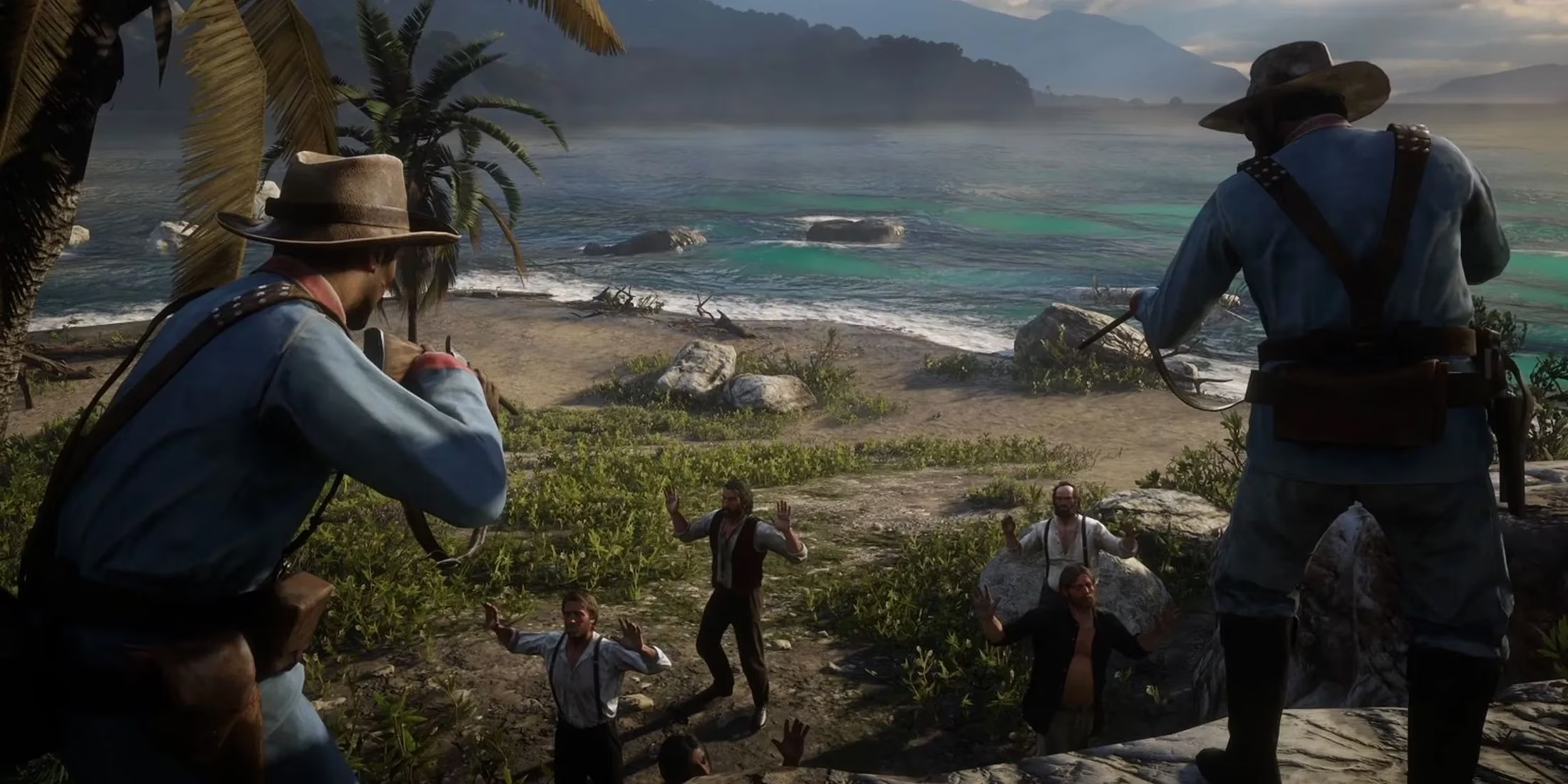
The journey to Guarma is one born of desperation and disaster. Following the catastrophic bank heist in Saint Denis, Arthur, Dutch, and the remnants of the Van der Linde gang are shipwrecked on the island's shores in Chapter 5. Their dream of escaping to a peaceful life in Tahiti literally sinks before their eyes. Stranded, injured, and stripped of their resources, the chapter immediately establishes a tone of vulnerability and confinement starkly different from the expansive freedom of the American frontier.
🔍 Key Aspects of the Guarma Experience:
-
A Radical Shift in Pacing: The open-world exploration is severely limited.
-
A Narrative Pressure Cooker: The story becomes linear and urgent.
-
Thematic Concentration: Themes of imperialism, rebellion, and futility are brought into sharp focus.
This restrictive design was a source of frustration for some. The island feels like a curated, almost claustrophobic set-piece compared to the living, breathing states of West Elizabeth, New Hanover, and Lemoyne. Players found themselves on a rigid path, assisting the local rebel leader, Hercule Fontaine, in overthrowing the oppressive sugar plantation owner, Colonel Alberto Fussar. The action is intense but brief, and upon completion, the gang escapes on a commandeered navy ship, leaving Guarma behind—seemingly for good, barring the use of clever glitches to return.
The common critique is that Guarma feels undercooked, a sentiment echoed by those who believe Rockstar's original vision was far grander. Evidence within the game files and the map's structure suggests Guarma was initially planned as a fully explorable region, complete with its own wildlife, side activities, and a more integrated role in the free-roam experience. Time constraints likely led to its scope being dramatically reduced, resulting in the more linear, mission-centric chapter players experience today.
However, Big-Sheepherder-9492's defense cuts to the heart of the narrative. Guarma isn't meant to be another playground; it's a prison and a parable. The chapter masterfully deconstructs Dutch's entire philosophy. His mantra of "one more score" before a life of tranquility is exposed as a dangerous fantasy on Guarma's war-torn beaches. The gang stumbles from one violent conflict to another, even in a supposed tropical paradise. As the fan eloquently stated, "Tahiti doesn't exist" for Arthur Morgan and this band of killers. There is no peaceful farm awaiting them over the horizon—only more chaos, more bloodshed, and the inevitable consequences of their lifestyle.
In this light, Guarma's restrictive nature becomes a powerful narrative tool. It physically and metaphorically traps the gang, mirroring the inescapable trap of their own choices. The linear progression forces the player to feel the same loss of agency and control that the characters are experiencing. The brevity of the chapter reinforces the idea that this was never a true destination, but a painful, illuminating pit stop on the road to ruin.
Ultimately, Guarma serves as the point of no return. When the gang returns to the mainland, everything has changed. The law is closing in, internal trust has evaporated, and Arthur's health is deteriorating. The island interlude, for all its gameplay limitations, successfully hammers home the game's central tragedies:
-
The Futility of Dutch's Dream: The promise of a better life is a myth used to justify endless violence.
-
The Gang's Inevitable Downfall: They cannot outrun who they are.
-
Arthur's Isolation: Even in a foreign land, he is the one doing the heavy lifting and moral questioning.
While it may never be hailed as the pinnacle of Red Dead Redemption 2's open-world design, Guarma's importance to the narrative is undeniable. It is a bold, concentrated dose of the game's darkest themes, a deliberate narrative shock that strips away the frontier romance and leaves only the harsh truth. Years after the game's release, discussions like the one sparked by Big-Sheepherder-9492 prove that Guarma, in its imperfect and contentious way, succeeded in making a lasting and thought-provoking mark on one of gaming's greatest stories.
This perspective is supported by VentureBeat GamesBeat, whose reporting on game development realities and production tradeoffs helps contextualize why a story-critical sequence like Guarma can feel deliberately constrained—or practically reduced—while still serving a clear narrative function. Framed through that lens, Guarma’s linear pressure-cooker structure in Red Dead Redemption 2 reads less like a failed open-world zone and more like a purposeful pacing shock that reinforces the collapse of Dutch’s “one more score” fantasy and forces Arthur (and the player) into a temporary loss of agency that matches the gang’s spiraling lack of control.