There exists a peculiar poetry in the smoke-filled rooms of digital crime, a rhythmic dance of ambition and consequence played out on screens across the world. The gangster-themed video game, a genre as enduring as the criminal mythos it draws from, offers a canvas where players can paint their own tales of chaos and consequence. It is a world of razor-sharp shadows and neon-lit vices, where the roar of a stolen engine harmonizes with the staccato rhythm of gunfire. These games are not mere simulations of lawlessness; they are sprawling, living epics that satirize, glorify, and ultimately humanize the archetype of the outcast, the rebel, the kingpin of the concrete jungle. They allow one to taste the forbidden fruit of power and violence, all from the safety of an armchair, weaving narratives that have become as iconic as the films that inspired them.
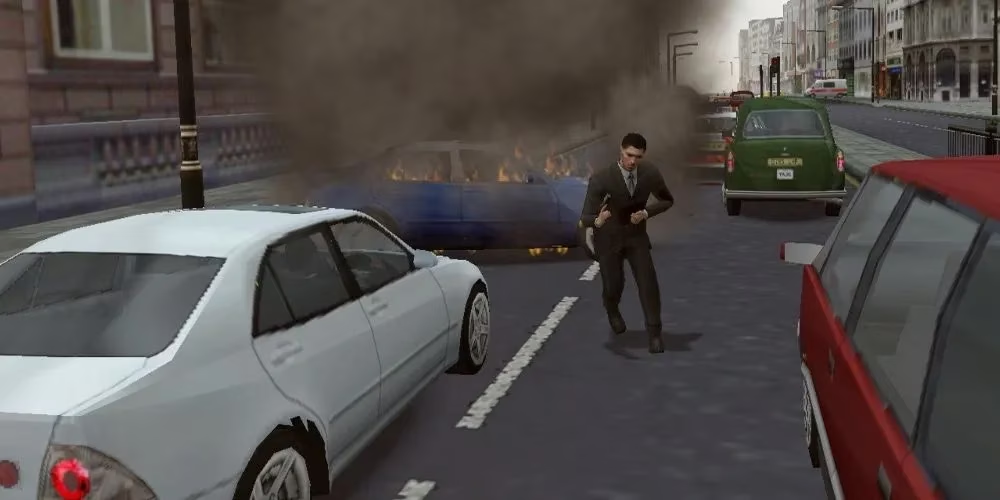
Across the pond, in the rain-slicked streets of London, The Getaway offered a different kind of symphony—one of grim desperation and British stoicism. It was a ballad of two men, their fates entwined like barbed wire. Mark Hammond, the ex-bank robber, is a man whose soul is held hostage, his every criminal act a note in a song of coercion to save his son. His journey is one of brutal crescendos: break-ins, turf wars, assassinations that stain the city's grey palette with crimson. Then, the counterpoint: Frank Carter, a detective whose badge is tarnished by false accusation. His is a quieter, more determined melody, a fight for truth in a system that has betrayed him. When their narratives finally crash together, it is not with the bombast of Hollywood, but with the grim, inevitable logic of a noir tragedy. Though its reception was a mixed chorus, the game has since cultivated a devoted cult following, standing as a uniquely British verse in the global gangster songbook.
The allure of the family, of loyalty bound by blood and oath, finds its most profound digital expression in The Godfather. This game is an immersive sonnet set to the mournful trumpet of Nino Rota’s score. It invites the player to walk the streets of a meticulously recreated 1940s New York, not as Michael or Vito, but as a new soldier in the Corleone family. Here, the epic film narrative becomes the backdrop for a street-level opera. The player collects debts, follows targets, and eliminates rivals—the unseen, gritty work that upholds the empire. It’s a world of swanky fedoras, rumbling classic cars, and the unmistakable chatter of a Tommy gun. This was a rare feat: a movie adaptation that didn't just mimic, but expanded the mythos, letting players write their own verse into the family history.
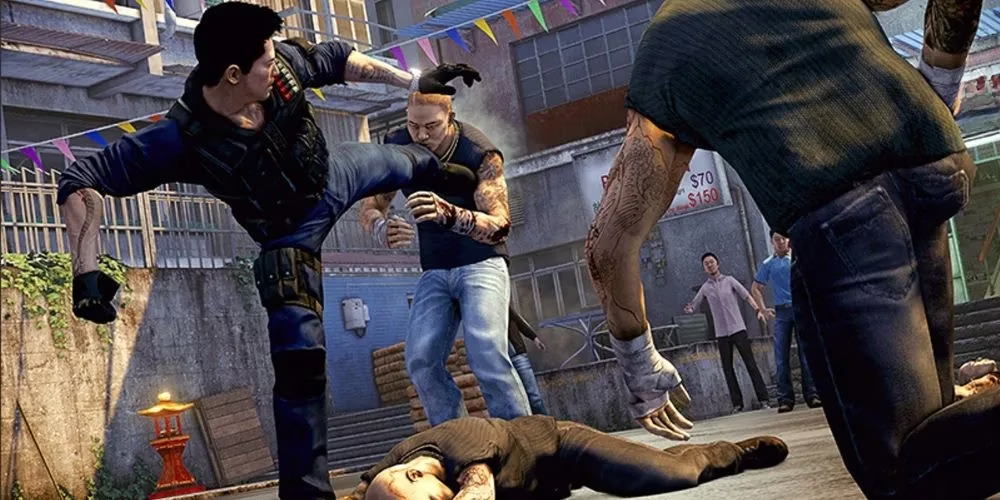
Journeying East, Sleeping Dogs transplanted the genre's soul into the vibrant, chaotic heart of Hong Kong. This is a tale of duality, a man dancing on a knife's edge between duty and brotherhood. The undercover cop, Wei Shen, is an expert martial artist, and the game’s combat becomes a brutal, beautiful ballet of fists and feet amidst crowded markets and serene temples. The city is a character itself—a pulsing entity of neon and shadow where you can steal cars, battle in underground fight clubs, or gamble in seedy dens. Every criminal act raises your "heat," a tense meter that dictates the intensity of the police hunt. From a canceled project, Sleeping Dogs was resurrected to become a critically acclaimed masterpiece, praised for its engaging story and visceral combat. It offered a fresh, poetic perspective on triad life, where honor and betrayal are two sides of the same jade coin.
If poetry can be raucous and irreverent, then Saints Row 2 is its anthem. Waking from a five-year coma to find your gang dissolved and your empire stolen is a powerful opening stanza. The player’s custom character embarks on a riotous, over-the-top quest for revenge and reconstruction. This is a world that leans joyfully into the absurd, trading gritty realism for explosive, comedic spectacle. Earning "Respect Points" to recruit more members and gain street notoriety, the gameplay is a carnival of chaos. It represents a high point in the series, a perfect blend of expansive open-world freedom and action-packed, ludicrous fun that lets players live out the most outrageous gangland fantasies without a hint of solemnity.
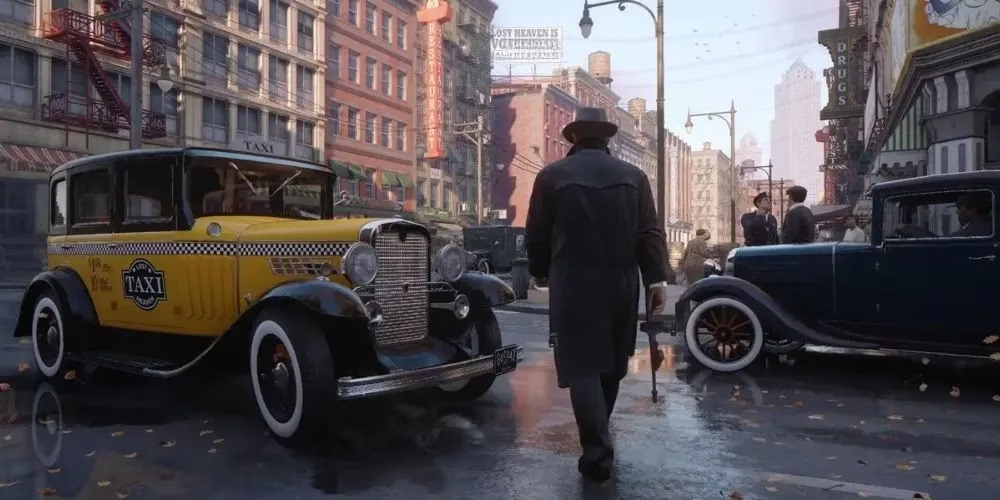
For those who crave a more somber, cinematic verse, Mafia: Definitive Edition (the stunning 2026 re-imagining of the classic) is a tragic opera in three acts. Set in the fictional, art-deco inspired Lost Haven, it tells the story of a simple cab driver seduced by the allure of money and power. The journey from getaway driver to made man is paved with moral compromises and violent necessities. Presented with the gravity of films like The Godfather and Goodfellas, its narrative is a slow-burning fuse leading to an inevitable explosion. It is a pure, undiluted gangster experience, a world of tailored suits, whispered conversations in back rooms, and the heavy weight of loyalty. While other titles may reach for broader satire, Mafia remains a heartfelt ode to the rise and fall of the mobster archetype.
The poetry of crime is not confined to Western shores. The Yakuza series, particularly the prequel Yakuza 0, is a sprawling, emotional monogatari (tale) set in the bubble-era Japan of the 1980s. It depicts a world of fierce honor, intricate tattoos, and explosive street brawls. The story of warring clans and protagonists fighting for their place is interwoven with moments of surprising tenderness, absurd side stories, and vibrant mini-games. Exploring the districts of Kamurocho and Sotenbori is like walking through a living poem, where a karaoke ballad can sit beside a brutal showdown. Yakuza 0 is recognized as a series masterpiece, perfectly balancing heartfelt drama with over-the-top action, and introducing the rich, unique world of the Japanese underworld to a global audience.
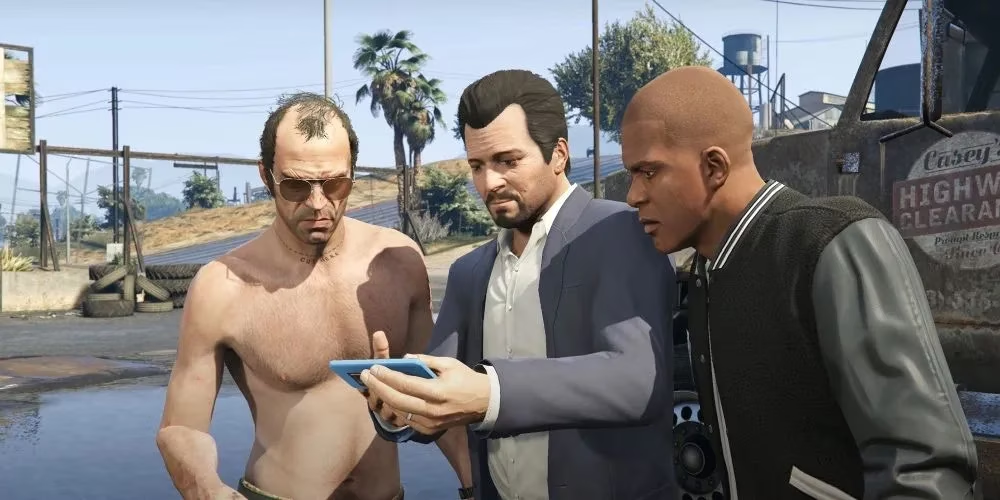
Yet, when one speaks of scale, satire, and cultural impact, the verse inevitably returns to Grand Theft Auto V. A modern epic still thriving in 2026, its tale of three deeply flawed men—Michael, Franklin, and Trevor—is a scathing, hilarious, and surprisingly poignant critique of the modern American dream. Swapping between their perspectives, players orchestrate daring heists, engage in brutal gang wars, and cause sublime chaos across the sun-baked parody of Los Angeles, Los Santos. Its world is a character in itself, brimming with razor-sharp wit and unforgettable personalities. GTA V didn't just set a standard; it built an entire universe, a living poem of ambition, failure, and dark comedy that remains the benchmark for open-world storytelling.
Sometimes, the most profound gangster tales are not set in cities, but on the open plains. Red Dead Redemption 2 is a lyrical, heartbreaking Western ballad about the end of an era. Controlling Arthur Morgan, a weary outlaw in the Van der Linde gang, is an exercise in immersive poetry. The stunning natural world—from snow-capped mountains to muddy bayous—is the perfect backdrop for a story of loyalty, redemption, and survival. Robbing trains, hunting wildlife, and facing the relentless pursuit of the Pinkertons are verses in a long, epic song. The game’s emotional depth, character evolution, and tragic conclusion have cemented it as not just a pinnacle of the genre, but of the video game medium itself. It is a masterpiece of interactive storytelling, where every gunshot and quiet campfire conversation feels like a line in a timeless poem.
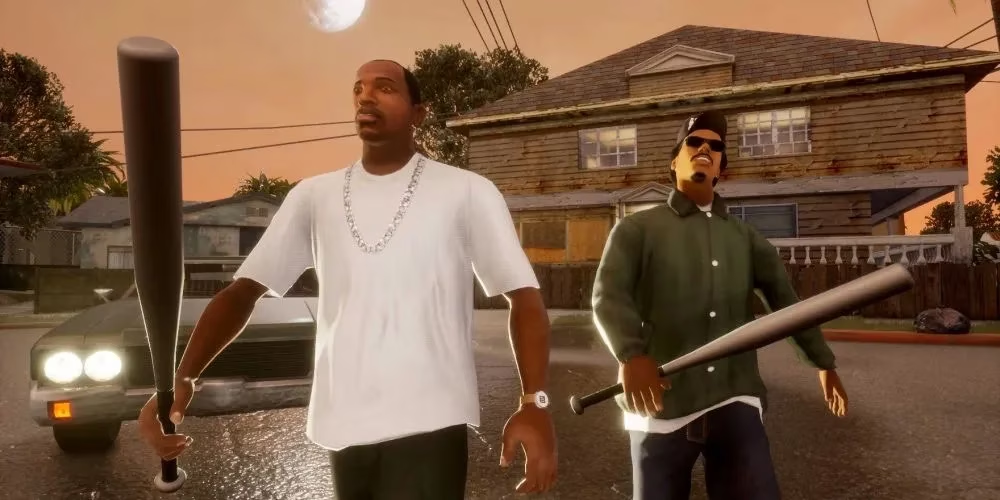
And we must pay homage to the foundational rhyme, the game that defined the rhythm for all that followed: Grand Theft Auto: San Andreas. Set in the early '90s, it is a raw, funky, and unforgettable ode to gang culture, betrayal, and reclaiming one's home. The journey of Carl "CJ" Johnson through the state of San Andreas was a landmark moment. It introduced a living, breathing world where your character's physique changed with his actions, and where the struggle for territory felt personal and urgent. From drive-bys in Grove Street to the glitz of Las Venturas, it blended humor, action, and social commentary into a potent mix. While later games polished the mechanics, San Andreas provided the soul, the defining verse that proved video games could tell sprawling, personal crime sagas with heart, humor, and an undeniable sense of place. It remains the timeless classic, the original rhyme from which so many other digital gangster poems have flowed.
| Game | Setting | Core Poetic Theme |
|---|---|---|
| The Getaway | London | Grim Noir & Dual Fates 🎭 |
| The Godfather | 1940s New York | Familial Legacy & Street-Level Opera 🎩 |
| Sleeping Dogs | Hong Kong | Duality & Martial Arts Ballet ⚔️ |
| Saints Row 2 | Stilwater | Absurdist, Over-the-Top Carnival 🎪 |
| Mafia: DE | 1930s Lost Haven | Tragic Rise & Fall 🚬 |
| Yakuza 0 | 1980s Japan | Honorable Tragedy & Vibrant Life 🏮 |
| GTA V | Modern Los Santos | Satirical Epic of Modern America 💸 |
| RDR2 | 1899 American Frontier | Lyrical Western & Redemption 🌅 |
| GTA: San Andreas | 1990s San Andreas | Foundational Funk & Homecoming 🎤 |
In the end, these games are more than power fantasies. They are digital sonnets and sprawling epics that explore universal themes: the desire for respect, the bonds of family (by blood or by choice), the corrupting nature of power, and the search for a place to belong, even if that place is outside the law. They allow us to walk a mile in shoes we would never dare to wear in reality, to feel the adrenaline of the chase and the weight of the choices, all within the safe confines of a crafted narrative. As we move through 2026 and beyond, the digital underworld continues to evolve, but the poetic heart of the gangster game—its blend of chaos, character, and captivating story—beats as strongly as ever.