As I sit here in 2026, looking back on the last decade and a half, my mind drifts through digital plains and pixelated cities. The 2010s, they say, were a golden age. But for me, they were more than a period; they were a personal odyssey. A shift from being led by the hand down narrow corridors to being set free in sprawling, breathing worlds. What is freedom in a game, if not the ability to stand on a virtual cliff, feel a digital wind, and choose your own path into the unknown? The games of that era didn't just give us maps; they gave us homes, stories, and memories etched into our very sense of play. Let me take you on a journey through these worlds that shaped me.
🔥 2010: The Lonesome Dust of the West
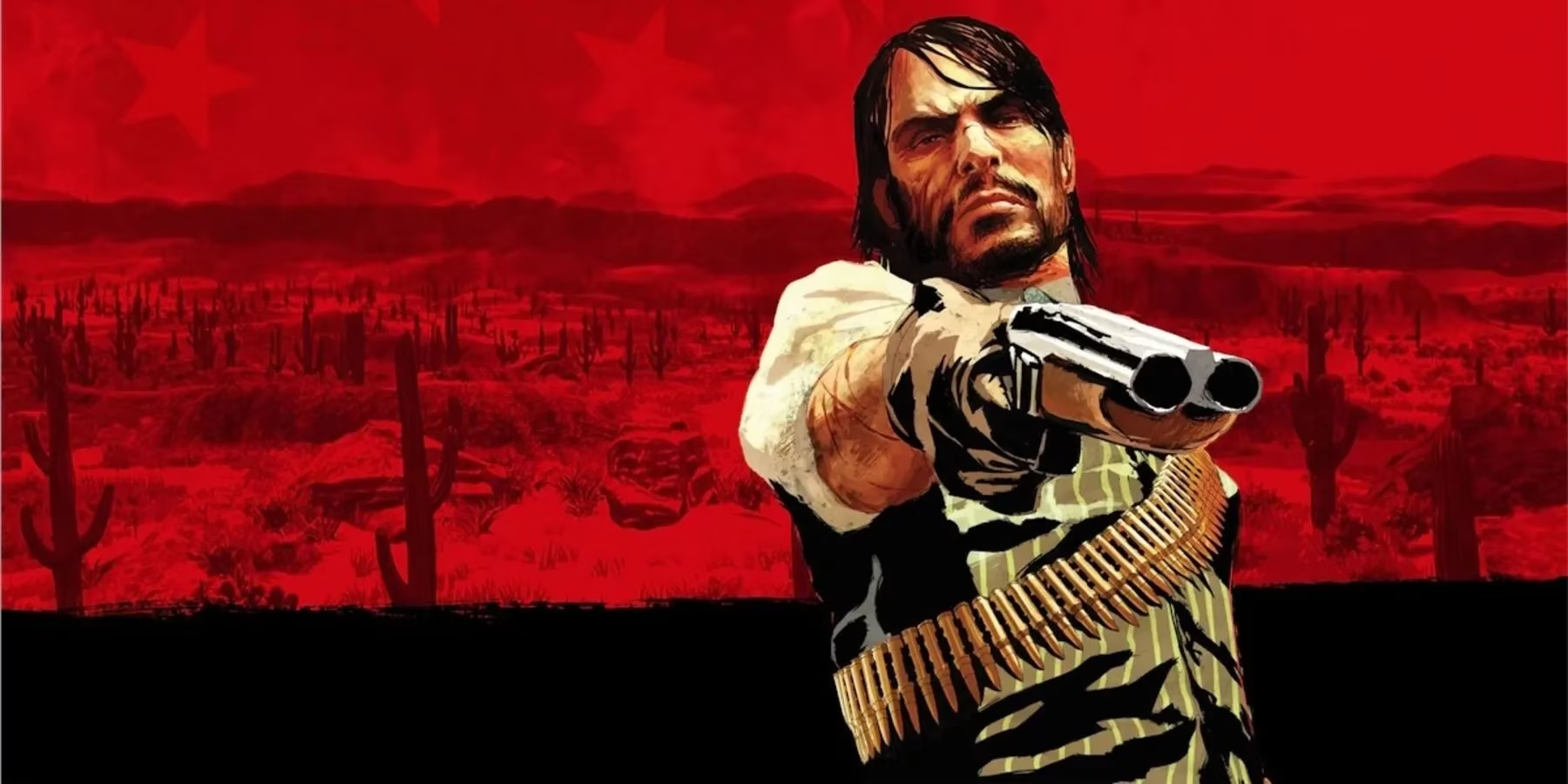
Was there ever a world so beautifully melancholic as the dying American frontier? Rockstar's masterpiece, Red Dead Redemption, wasn't just a game; it was an elegy. I remember the first time John Marston rode into the sunset, the weight of his past as tangible as the dirt on his boots. The world was alive with a keen eye for detail I'd never seen before. Hunting a deer in Tall Trees, the sound of my own breath mingling with the forest's whispers. Engaging in a tense duel at high noon, my heart pounding as I waited for the telltale flick of a wrist. From cattle herding to playing poker in a smoky saloon, every mechanic was a thread in the tapestry of an authentic 20th-century experience. It was a world where you could feel the era's last gasp, and I was there to witness it.
🐉 2011: The Call of the Dragonborn
Then came the shout that echoed across a generation. The Elder Scrolls V: Skyrim asked a simple, profound question: Who are you, and what will you become? The scale was, and in many ways still is, unparalleled. I wasn't just playing a story; I was weaving my own. Would I be a stealthy assassin lurking in the shadows of Riften, a noble warrior joining the Imperial Legion, or a rebellious mage seeking arcane secrets in the College of Winterhold? The freedom was intoxicating. I shaped the world as much as it shaped me, launching rebellions, uncovering ancient lore, and fine-tuning my skills to create a playstyle uniquely my own. The world of Skyrim wasn't just a setting; it was a second life, rich with secrets and cultures waiting to be learned.
💥 2012: Mayhem and Loot on Pandora
After the solemnity of Skyrim, Borderlands 2 was a riotous, colorful explosion. It took the open-world formula and injected it with pure, chaotic fun. The planet of Pandora was a vibrant, dangerous playground. The fast-frenzy gunplay, the endless search for that perfect, elaborately named weapon, the sheer variety of enemies—it was a constant, rewarding risk. But what truly made the world sing was its heart, buried under layers of sarcasm and violence. The quirky side characters, and especially the brilliantly written antagonist, Handsome Jack, made every mission memorable. And sharing that chaos with a friend in co-op? That transformed the open world from a solo adventure into a shared, laughing, looting carnival.
🚗 2013: Life in Los Santos
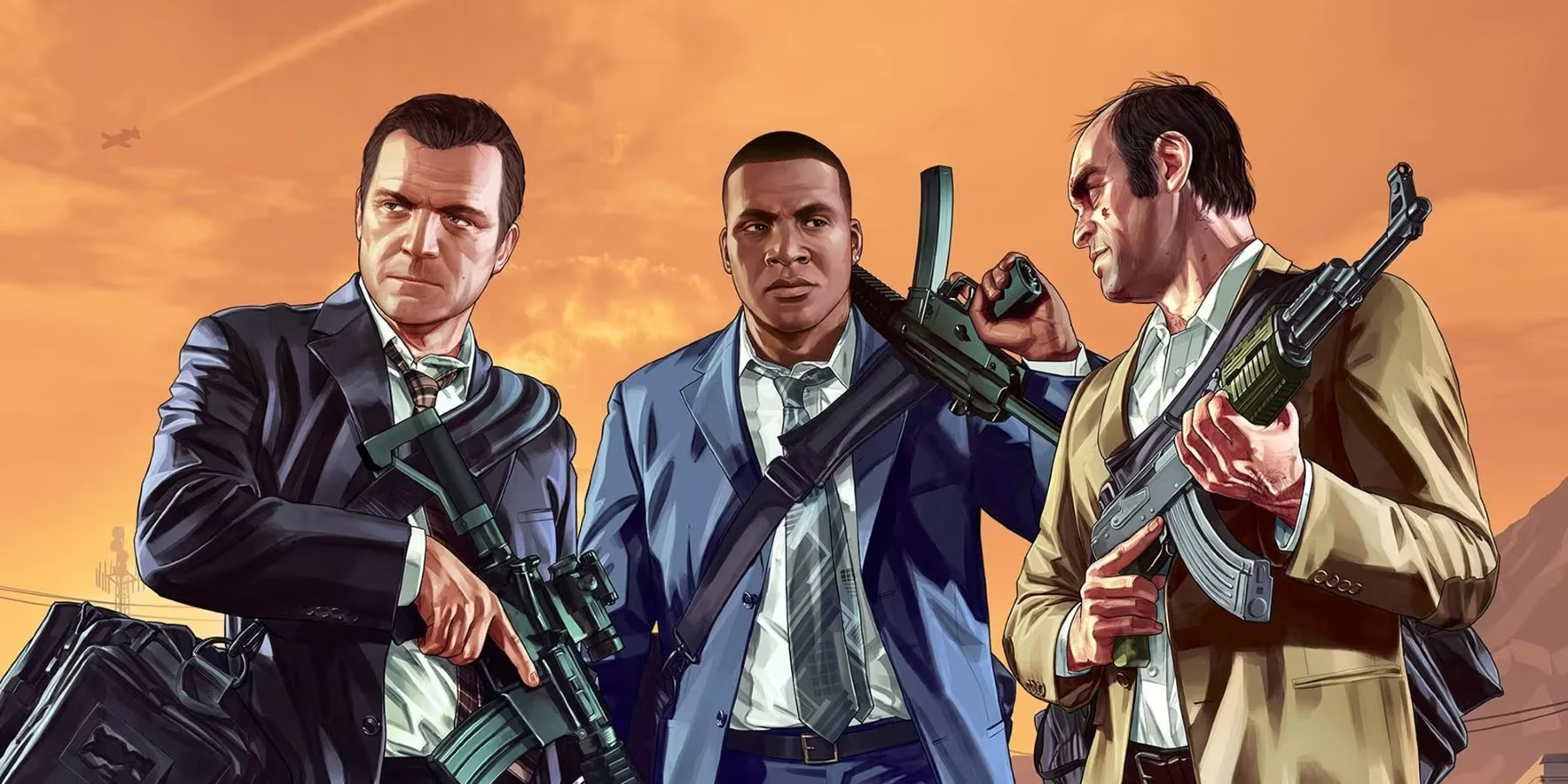
Scale took on a new meaning with Grand Theft Auto V. Los Santos wasn't just a city; it was a living, breathing, satirical mirror of modern life. The genius of switching between Michael, Franklin, and Trevor gave me three distinct lenses through which to view this vibrant world. One moment I'm planning an elaborate heist, the next I'm playing a round of golf or doing yoga on a mountaintop. Was it a real-life simulation or a blockbuster action film? It was the perfect, unforgettable blend of both. The dynamic heists added strategy, while the endless leisure activities in GTA Online created a social playground that, even now in 2026, communities still thrive in.
🗡️ 2014: The Shadows of Mordor
J.R.R. Tolkien's Middle-earth has always been a land of epic scale, but Shadow of Mordor made it personal—terrifyingly so. The Nemesis System was a revelation. My actions had real, dynamic consequences. An orc I let escape would return, scarred and vengeful, leading a stronger pack. Another I humiliated might forge an alliance against me. This wasn't a world of static enemies; it was an ecosystem of evolving rivalries and grudges. The dark, treacherous lands of Mordor became a tactical playground where stealth and free-flowing combat were tools for survival and domination. Exploring this vast land wasn't just for sightseeing; it was to grow stronger and face the personal enemies I had created.
🐺 2015: The Weight of Every Choice
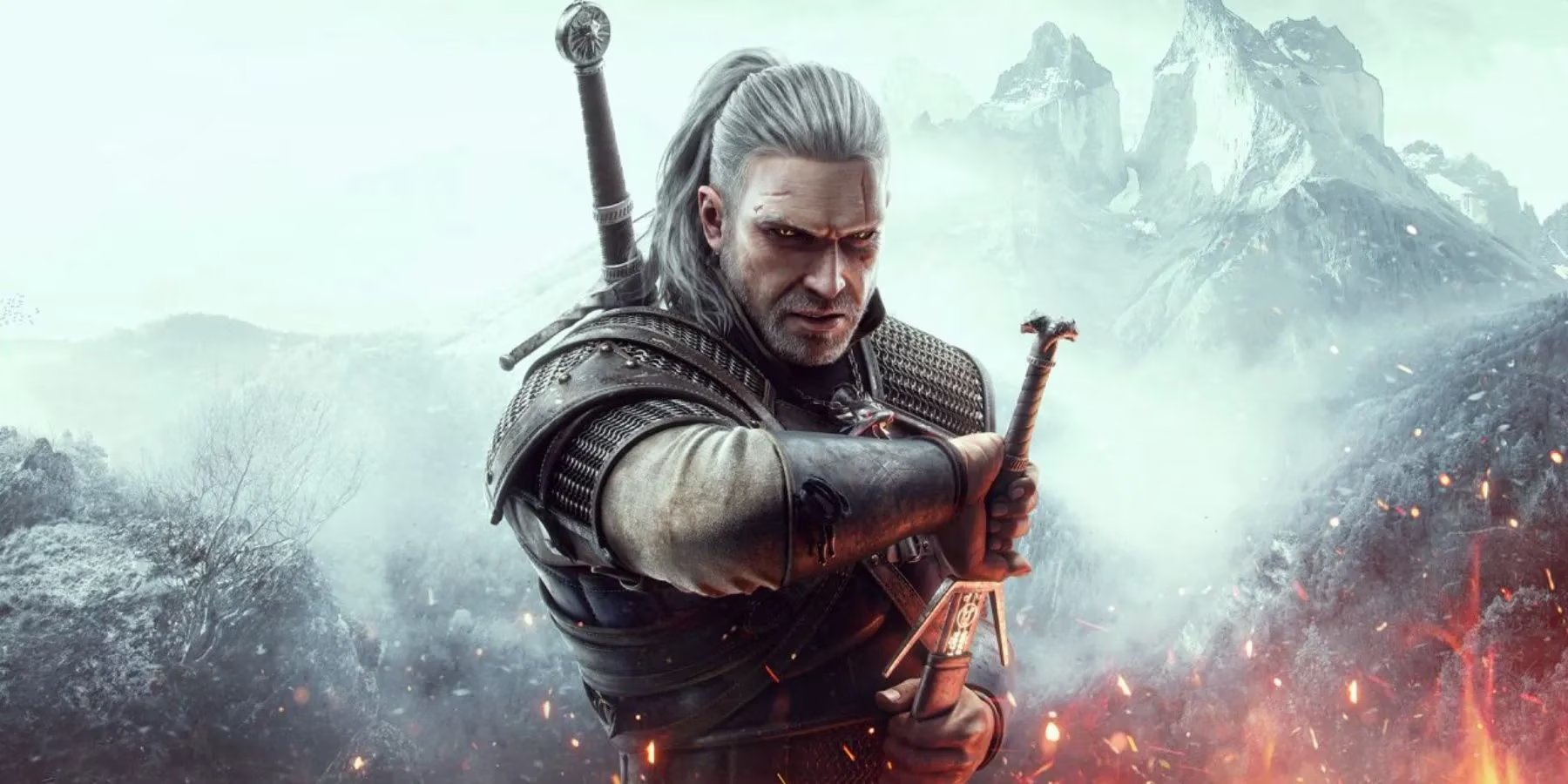
Then came a journey that redefined storytelling for me. The Witcher 3: Wild Hunt presented the Northern Realms not as a backdrop, but as a character itself—morally gray, emotionally complex, and breathtakingly beautiful. As Geralt, every decision carried weight. A seemingly minor side-quest could unravel into a heartbreaking tale that would later echo in the game's staggering 36 possible endings. These weren't fetch quests; they were meaningful stories that made the world feel dynamic and alive, ever-changing based on my agency. Riding through the war-torn countryside, the lines between good and evil blurred, making every act of mercy or violence deeply impactful.
🏎️ 2016: The Horizon's Call
2016 offered a different kind of freedom: the freedom of speed and sheer visual splendor. Forza Horizon 3's sprawling fictional Australia was a love letter to driving. It was a world not to save, but to savor. The consistency was astounding—a huge roster of cars, impeccable sound design that made every engine roar feel real, and nuanced controls that made traversing diverse terrain an immersive joy. The open world was my race track, my photo studio, my festival ground. It showed that an open world didn't need dragons or guns to be compelling; sometimes, the pure exhilaration of the journey, shared with a community, was enough.
🌿 2017: The Breath of True Freedom
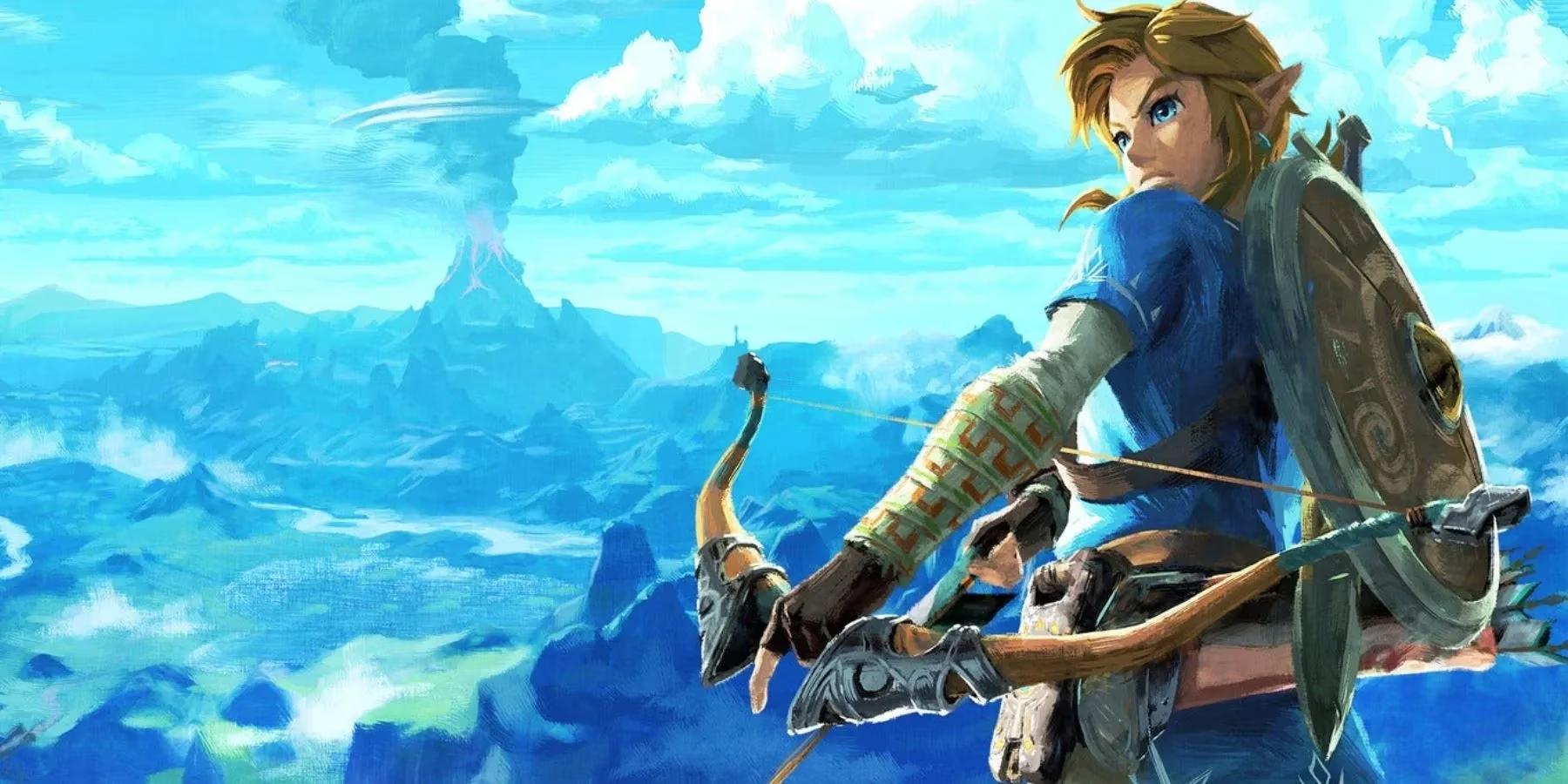
And then, everything changed. The Legend of Zelda: Breath of the Wild didn't just give me an open world; it gave me a physics sandbox and said, "Go play." The sheer, unbridled player freedom was unlike anything I'd experienced. Could I burn that grass to create an updraft? Could I roll that boulder down the hill to crush an enemy camp? The answer was always yes. The Kingdom of Hyrule was a puzzle in itself, rewarding creativity at every turn. The non-linear path, the cooking recipes, the way every resource could be utilized—it was a masterclass in emergent gameplay. It asked, "What if?" and then had an answer for every wild idea I could conceive.
🤠 2018: The Devil in the Details
Rockstar returned to the west, but this time, the detail was so profound it felt less like a game and more like a time capsule. Red Dead Redemption 2 was their biggest, most meticulously crafted world. The realism was staggering. I felt the bond with my horse, worried about cleaning my guns, and watched as NPCs lived their own lives. The mature storytelling, fleshing out every member of Arthur Morgan's camp, coupled with the honor system, made my role in this world profoundly personal. Every kindness and every cruelty shaped Arthur's legacy. It was a world so detailed, so immersive, that leaving it felt like waking from a deep, poignant dream.
⛰️ 2019: The Strand That Connects Us
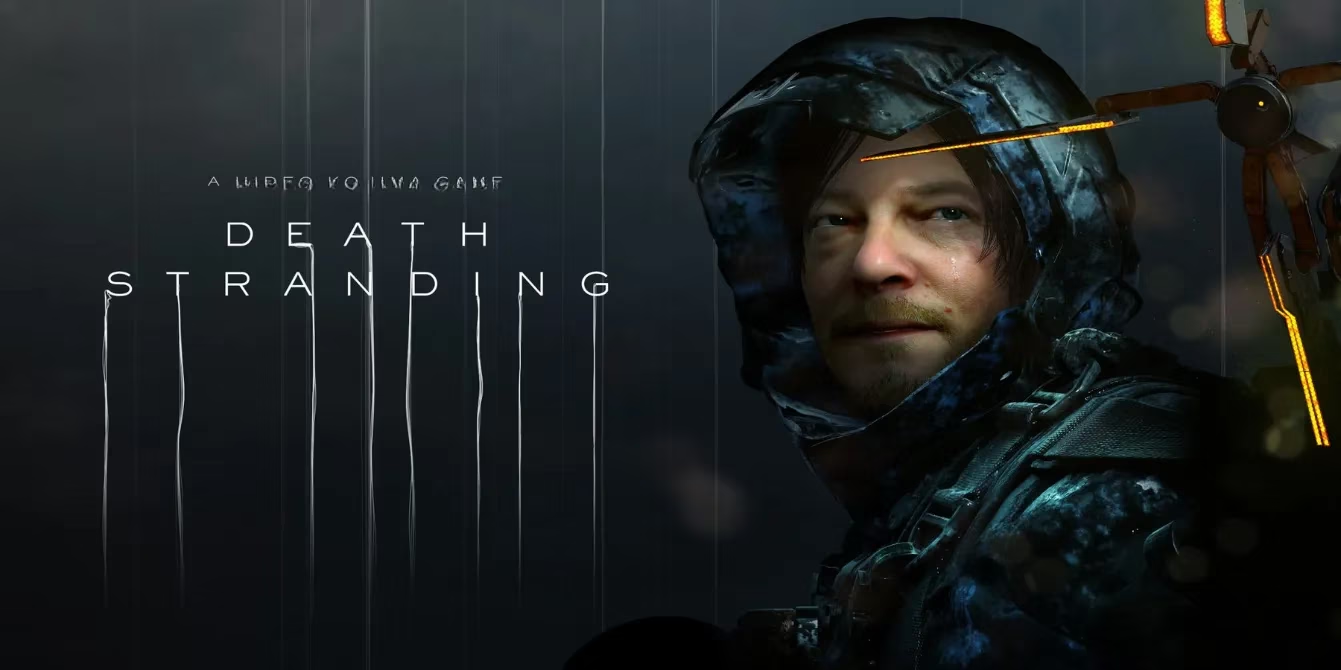
We ended the decade with perhaps the most unique vision of all. Death Stranding redefined what an open world could be. It asked, what if the core gameplay wasn't combat or conquest, but connection? The post-apocalyptic landscape of America was hauntingly beautiful—lush forests, serene beaches, picturesque mountains. My goal wasn't to dominate, but to rebuild. The innovative Strand System turned a solitary journey into a collaborative effort. Seeing a ladder or a bridge left by another player was a moment of silent gratitude. Planning my route over treacherous terrain became a meditative, strategic puzzle. It was a slower, more thoughtful pace, a refreshing reminder that open worlds could be about bringing people together, not just fighting through them.
Looking back from 2026, this decade of worlds was more than a list of games. It was a journey through different facets of freedom itself—freedom to explore, to choose, to fight, to drive, to connect, and to simply be. These worlds were my homes, my stories. They asked questions, and in their vast, open spaces, I found my own answers. The legacy of the 2010s isn't just in the code; it's in the memories we made, one breathtaking horizon at a time. 🎮✨